






The political temperature in West Bengal is rising again, and this time the stage is Mathurapur. With the 2026 West Bengal Assembly Election just months away, both the Trinamool Congress (TMC) and the Bharatiya Janata Party (BJP) are back in campaign mode. The BJP is betting big on its ‘Parivartan Yatra’, but TMC’s Abhishek Banerjee has chosen the same ground to send a very different message: Bengal is not buying what the BJP is selling.
“Trailer Now, Movie in May”: Key Quotes from Abhishek

At a massive rally in Mathurapur, Abhishek didn’t just address a crowd—he delivered a warning. Turning to the media cameras, he famously said, “Don’t show me, show this crowd for 10–15 minutes. This is just the trailer. In May, I’ll show you the movie.” It was more than a catchy one-liner. It was a statement of confidence that the so‑called ‘wave’ the BJP expected in Bengal is simply not materialising on the ground.
The BJP’s ‘Parivartan Yatra’: A Grand Plan With Weak Crowds?
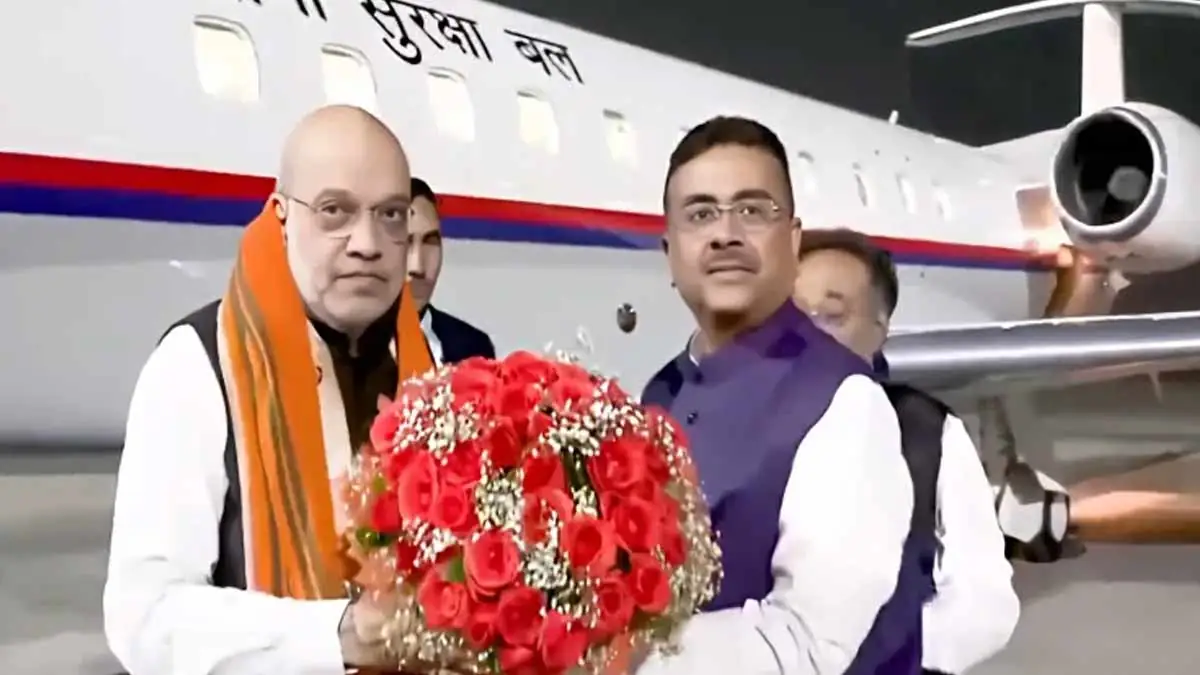
To understand Abhishek’s aggression, we need to look at what he was responding to. On 2 March, Union Home Minister Amit Shah kicked off the BJP’s ‘Parivartan Yatra’ from the same region—Raidighi in South 24 Parganas. The message from Shah was clear: Bengal needs a “change”, and only a BJP government can deliver that. The slogan was predictable but sharp: “Paltaano dorkar, chai BJP sarkar” (Change is needed, we want a BJP government).
On paper, it’s a high-voltage campaign. Top central leaders, Union ministers, and even BJP chief ministers from other states have been flying in, trying to build momentum before the 2026 polls. The Yatra is supposed to criss‑cross the state and culminate in a mega rally at Kolkata’s Brigade Parade Ground on 14 March, led by Prime Minister Narendra Modi.
But there’s a gap between optics and reality. Reports and visuals from multiple stops of the Parivartan Yatra tell a different story: half‑empty grounds, lacklustre crowds, and an evident struggle to mobilise supporters. Local BJP leaders, who were once charged with the dream of “capturing Bengal”, are now often seen visibly irritated or embarrassed by poor turnouts.
This is exactly the vulnerability Abhishek Banerjee chose to attack.
- Read More > Mamata walks the ‘ghost’ on the dharna stage!
West Bengal Assembly Election 2026
Abhishek Banerjee Challenges BJP: From Crowd Show to Seat Count
Standing on the same soil where Shah launched his campaign, Abhishek turned the BJP’s narrative on its head. He highlighted the visible difference between TMC and BJP rallies:
“How many people were at your rally? Just look at this crowd today. Let the media show this picture. Then they will understand where the public stands.”
Abhishek’s core message was blunt and provocative: in the coming 2026 Assembly Election, he will bring BJP’s tally down to around 50 seats. He reminded everyone that in 2021, the BJP, which loudly claimed it would cross 200, ended at 77 seats. In his view, that number will only go down further.
This is not just an electoral prediction; it’s a psychological game. By openly challenging BJP’s seat count, Abhishek is trying to send a signal to both cadre and fence‑sitters: the TMC is not on the defensive, it is still very much in control of Bengal’s political landscape.
The Women’s Vote: TMC’s Silent Backbone?
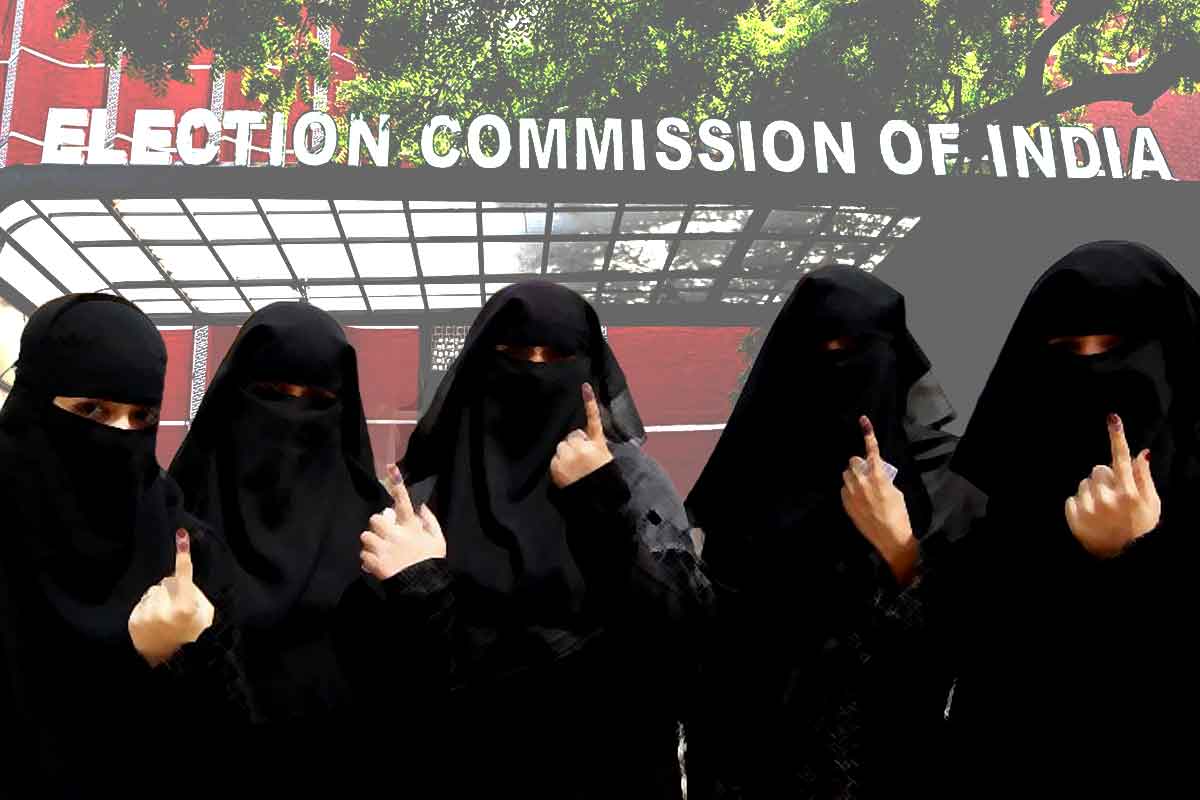
One of the most interesting parts of Abhishek’s speech was his repeated emphasis on women. He claimed that “narishakti”—women’s power—is firmly with the TMC. And if women are with TMC, he argued, no party can defeat them in Bengal.
This is not an empty boast. Over the last decade, Mamata Banerjee’s government has very consciously built welfare programs targeting women, be it through scholarships, social schemes, or direct support systems. In election after election, analysts have pointed out that women voters have become a key pillar of TMC’s strength.
Abhishek’s argument is simple: as long as women continue to see TMC as the party that speaks for them, the BJP’s dream of capturing Bengal will remain just that—a dream.
Central Agencies, SIR, and the Politics of ‘Humiliation’
Beyond crowd numbers and rallies, Abhishek also raised a deeper grievance that resonates with many Bengal voters: the sense that the state is being constantly targeted and “humiliated” by the Centre.
According to him, whenever the BJP fails to defeat TMC politically, it turns to other methods—central agencies, new policies, and administrative tools. This time, he pointed at SIR (Special Investment Region), framing it as yet another attempt to control and undermine Bengal’s interests from Delhi.
Whether one agrees with his interpretation or not, this narrative of “Delhi vs Bengal” has long been a powerful emotional tool in state politics. TMC has skillfully projected itself as the defender of Bengal’s dignity, culture, and autonomy, while painting BJP as an “outsider” force trying to dictate terms.
Abhishek reinforced this by referring to ongoing protests—especially Mamata Banerjee’s dharna at Dharmatala—claiming that as long as what he calls BJP’s ‘excesses’ continue, TMC will remain on the streets in defence of the people.
Is BJP’s Bengal Strategy Misreading the Ground Reality?
From a purely strategic point of view, the BJP’s approach seems heavily dependent on top‑down momentum: big leaders, big slogans, big yatras. This worked to some extent in 2019 and 2021, when the party made massive gains compared to its earlier position in Bengal.
But Bengal is not just another Hindi‑belt state where national narratives easily override local equations. Language, culture, identity, and welfare—these all play a huge role in shaping political sentiment here. If the BJP fails to build a deeper local connect and cannot sustain its organisational network on the ground, star power alone may not be enough.
Abhishek Banerjee’s rally in Mathurapur seems designed to highlight exactly that contrast: where BJP needs Delhi’s heavyweights to pull crowds, TMC can still rely on local energy and emotional connect.
2026: Trailer, Movie, or a Plot Twist?
So, what does all of this tell us about the West Bengal Assembly Election 2026?
On one side, you have the BJP, determined to convert its rising vote share into actual power and still dreaming of a saffron Bengal. On the other side, you have TMC, battle‑tested and bruised, but clearly not ready to concede an inch of political space.
Abhishek Banerjee’s “trailer vs movie” remark captures the mood of TMC’s campaign—confident, combative, and keen to show that 2021 was not a one‑time victory but the beginning of a longer dominance. By promising to push BJP below 50 seats, he is not only rallying his own supporters but also trying to demoralise the opposition.
Will his prediction come true? That will depend on many factors: anti‑incumbency, candidate selection, alliance equations, and how strongly voters feel about issues like corruption, welfare, identity, and central intervention.
For now, one thing is clear—Bengal’s political battle is far from settled. If this is just the trailer, as Abhishek claims, the “movie” in May 2026 could be one of the most fiercely fought elections the state has seen in recent times.
And both sides know: the crowd pictures from rallies like Mathurapur may be more than optics—they might be early clues to which way the wind is actually blowing.
One thought on “Abhishek Banerjee Challenges BJP: Vows to Cut Seats to 50 in West Bengal Assembly Election 2026”