




1 / 9 – LPG Crisis, Middle East Tension… and a New Warning for Indian Gas Users
War-like tension in the Middle East between Iran, Israel and the US is not just a foreign headline anymore – it is quietly entering Indian kitchens.
Across several Indian cities, a serious shortage of commercial LPG cylinders has started to bite. Many small restaurants and hotels are cutting down their menus. Some are temporarily shutting shop because they sim ply cannot get enough cylinders at a workable price.
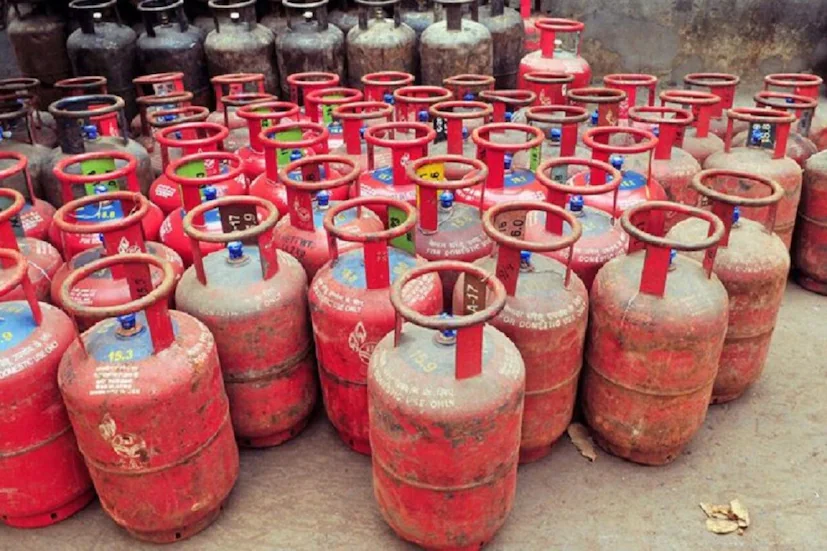
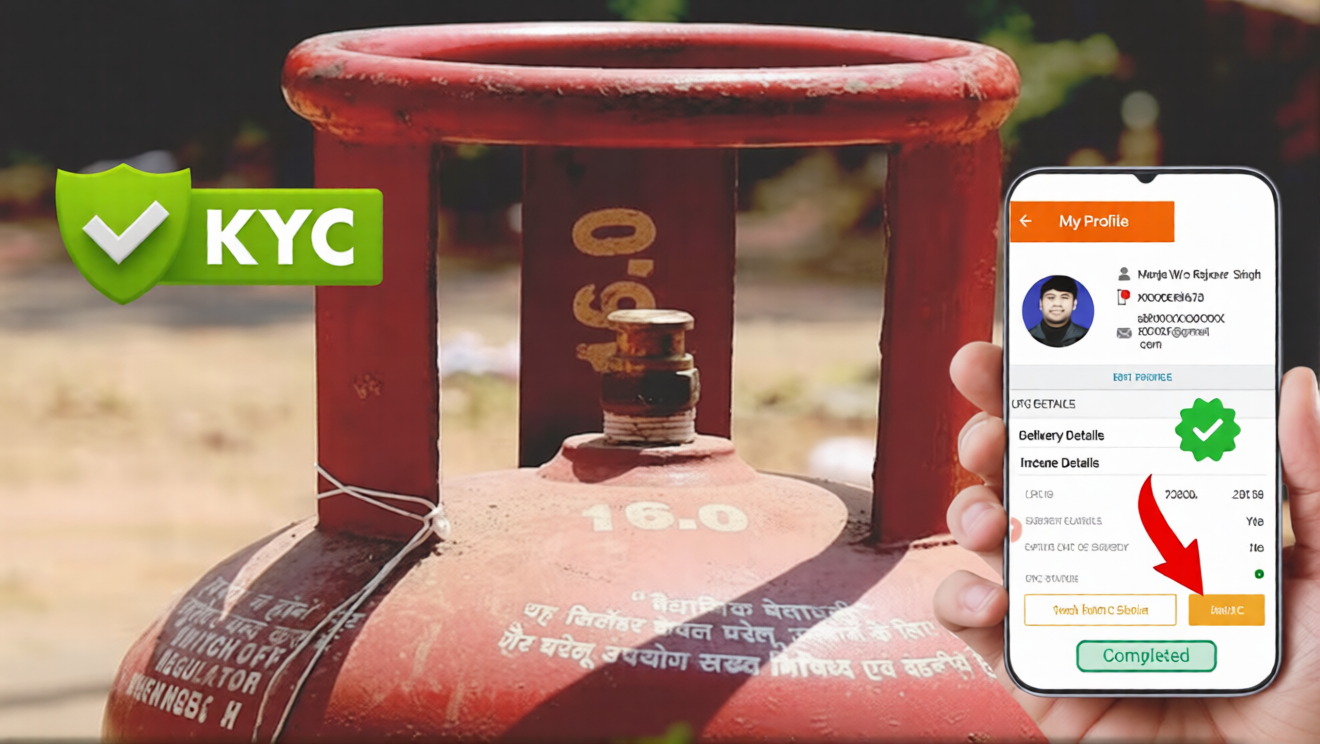
In the shadow of this crisis, the central government has issued a new and very important instruction for all LPG users in India: complete your LPG e-KYC immediately.
This is not just another bureaucratic formality. At a time of global fuel uncertainty and domestic cylinder shortages, this e-KYC drive could decide who gets uninterrupted gas supply and subsidy – and who gets left behind.
2 / 9 – Why LPG e-KYC Has Suddenly Become So Important
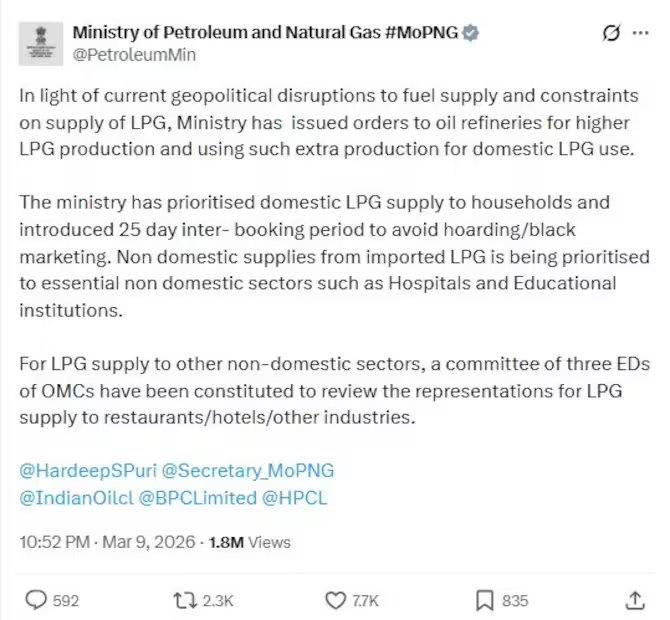
To “clean up” LPG distribution and make gas supply more transparent, the Ministry of Petroleum and Natural Gas recently issued a nationwide advisory.
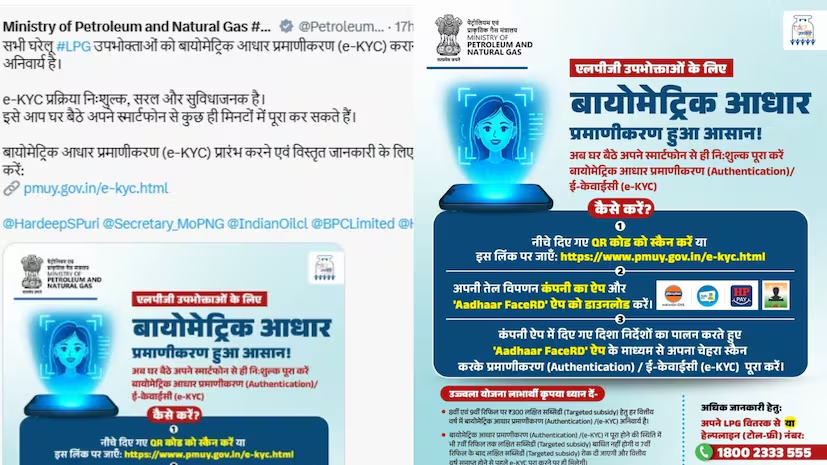
On March 10, the ministry instructed all domestic LPG customers to complete their biometric e-KYC as soon as possible.
Officials claim that once e-KYC is completed:
- LPG subsidy records will be more accurate,
- Cylinder delivery data will be properly tracked,
- Leakages and fake connections can be reduced.
This order does not come in a vacuum. Due to the ongoing tensions in West Asia and disruptions in global energy shipping routes, several Indian cities are already seeing LPG cylinder shortages. In such a situation, the government clearly wants a tight, verified list of genuine customers before the crisis deepens.
The message between the lines is simple: get your LPG e-KYC done now, before non-verified connections start facing problems.
3 / 9 – Step by Step: How to Complete LPG e-KYC from Your Phone
According to official communications and media reports, LPG consumers can complete e-KYC from home in a few simple steps. Here is a clear, step-by-step guide based on the government’s pattern:
Step 1 – Visit the Official Website
- Go to pmuy.gov.in or the official website of your LPG provider (Indane, Bharat Gas, or HP Gas).
- Always check the URL carefully to avoid fake or phishing sites.
Step 2 – Download Your Gas Company’s Mobile App
From the home page or official links, download your LPG distributor’s mobile app:
- Indane Gas app,
- Bharat Gas app,
- HP Gas app.
Install the correct app on your smartphone and log in with your registered mobile number.
Step 3 – Install Aadhaar FaceRD App
- Open the Google Play Store (or relevant app store),
- Search for “Aadhaar FaceRD”,
- Download and install the app.
This app is used for Aadhaar-based facial recognition and will help complete your biometric e-KYC.
Step 4 – Scan Your Face and Complete e-KYC
- Open your LPG company’s app again,
- Go to the e-KYC / Aadhaar verification / customer verification section,
- Follow the on-screen instructions – the app will connect you to Aadhaar FaceRD,
- Use your phone camera to scan your face as guided.
Once your facial recognition is successful, your LPG e-KYC will be marked as completed.
4 / 9 – “Free, Easy, From Home” – The Official Assurance
Through official social media accounts and press notes, the government is stressing that this e-KYC process is:
- Completely free, with no extra fee,
- Fully digital, doable from home,
- Quick, usually finished in just a few minutes.
A special information link has also been shared by the ministry, and oil companies are expected to send reminders to registered mobile numbers.
However, while the process may look simple on paper, in reality many users – especially senior citizens, rural families, or those without smartphones – may find it confusing. In such cases, the burden silently shifts to family members or local agents to ensure that the e-KYC is completed.
Despite these challenges, the tone of the advisory is clear: this is not optional forever, it is expected from every LPG holder.
5 / 9 – Who Supplies Your Gas? Indane, Bharat Gas, HP Gas and the New Rules
India’s domestic LPG network is primarily handled by three major providers:
- Indane Gas,
- Bharat Gas,
- HP Gas.
No matter which company supplies your cylinder, the e-KYC requirement applies to all domestic customers.
As per reports:
- Users must log into their respective gas company’s app,
- The app will trigger the Aadhaar facial verification process,
- Only after successful biometric authentication will the e-KYC be considered complete.
Behind this technical setup lies a clear policy goal: link each LPG connection tightly to a verified Aadhaar identity, closing the doors on:
- Duplicate or fake connections,
- Unauthorised transfer of cylinders,
- Ghost beneficiaries taking subsidy without actually using LPG.
In the middle of a looming supply crunch, the government wants to know exactly who is in the system – and who isn’t.
6 / 9 – New Priority Order: Who Gets Natural Gas First Now?
Alongside the e-KYC push, the government has quietly changed another crucial policy – who gets priority access to domestically produced natural gas.
Until now, the priority list mainly included:
- CNG for vehicles, and
- Piped natural gas (PNG) for households.
But as per a recent government statement issued on the night of March 9, gas cylinder manufacturing units have now been added to this priority list.
What this means in practice:
- Domestically produced natural gas will first go to:
- LPG cylinder manufacturing units,
- CNG units for vehicles,
- PNG supply for households,
- Only after these are served will natural gas be routed to other industries.
Officials believe this will:
- Reduce disruption in LPG cylinder availability,
- Support domestic cooking gas supply even during global shocks,
- Protect household consumers as far as possible.
In simple words, your kitchen is officially ahead of many industries in the gas queue.
7 / 9 – Global Turbulence, Indian Kitchens: Why the Situation Is So Serious
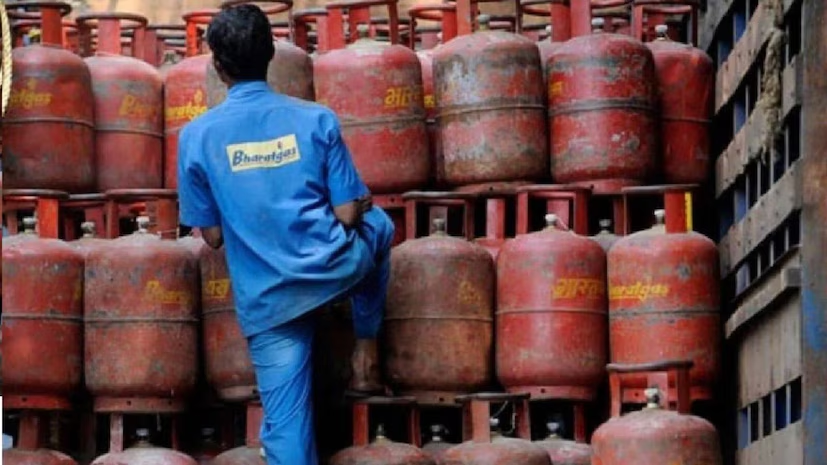
To understand the urgency behind these decisions, we must look at India’s dependence on LPG.
- India uses roughly 31.3 million tonnes of LPG every year,
- Nearly 87% of this is used by households,
- The remaining portion goes to hotels, restaurants, commercial units and industries.
At the same time, international reports show a steep drop in shipping activity through the Strait of Hormuz, one of the world’s most important energy corridors.
From this narrow stretch of water flows:
- Around one-fifth of global oil,
- A huge share of liquefied natural gas (LNG).
With tensions escalating in West Asia, this traffic has reduced. The impact is visible in:
- Global energy prices,
- Availability of fuel,
- Localised shortages, especially for commercial LPG users in India.
In this fragile scenario, the Indian government is clearly trying to lock in and protect verified domestic users first – through both priority gas allocation and mandatory e-KYC.
8 / 9 – Special Committee, Commercial Pain: What About Hotels and Restaurants?
The crisis is not just about home kitchens. Across various districts, hotels, restaurants and small eateries are already facing:
- Reduced supply of commercial cylinders,
- Higher LPG costs,
- Pressure to cut menu items or operating hours.
Recognising this, the Centre has formed a special committee comprising top officials from oil marketing companies to:
- Thoroughly review the LPG supply situation,
- Study the impact on commercial users,
- Suggest measures to keep gas flowing to priority sectors.
However, the reality is stark:
- Households and essential uses are now formally at the top of the priority list,
- Commercial users may have to absorb more pain in the short term,
- Small food businesses, especially in tourist and urban areas, are extremely vulnerable.
While committees and official notes continue, ordinary consumers – both domestic and commercial – are just hoping their next cylinder actually arrives.
9 / 9 – What Every LPG User Should Do Now
In the middle of all this, what should you, as an LPG consumer in India, actually do?
1. Complete Your LPG e-KYC Immediately
Do not wait for the “final deadline” or for your booking to start failing. Follow the steps:
- Visit pmuy.gov.in or your gas company’s official site,
- Install your LPG provider’s app,
- Use Aadhaar FaceRD for biometric verification,
- Make sure you receive a confirmation of successful e-KYC.
2. Be Alert to Scams
Whenever a big government process goes online, fraudsters become active. Protect yourself by:
- Using only official apps and websites,
- Ignoring random links on SMS/WhatsApp claiming “KYC update required”,
- Never sharing OTPs or Aadhaar details over unknown calls.
3. Plan Your Cylinder Usage and Booking
With supply under pressure in some regions:
- Avoid waiting till the last possible day to book,
- Track your usual consumption pattern and plan ahead,
- If you run restaurants or hotels, explore backup strategies like staggered cooking schedules.
4. Stay Informed About Policy Changes
Rules around LPG pricing, subsidies and documentation can change quickly. Keep an eye on:
- Official updates from your gas company,
- Trusted news platforms,
- Government advisories.