





On 14 March, West Bengal once again pauses to look back at one of the most defining — and disturbing — chapters in its recent history: Nandigram. Officially marked as “Nandigram Day”, the date has now become far more than a mere anniversary of a police firing. It has evolved into a powerful political symbol, and no one uses that symbol more effectively than Chief Minister Mamata Banerjee.
This year, nearly 19 years after the 2007 bloodshed, Mamata’s message is as emotional as it is political. In a social media post, she paid homage not only to those killed in Nandigram, but also to the martyrs of Singur and Netai, linking three separate tragedies into one larger narrative of sacrifice and resistance.
“On Nandigram Day, I pay my humble tributes and deepest respects to all martyrs of Nandigram, Singur and Netai — and to martyrs across the world,” she wrote.
The words are steeped in emotion, but they are also calculated. In Bengal, memory is politics, and Mamata Banerjee understands this better than anyone else.
Nandigram: From Tragedy to Political Turning Point
For Mamata, Nandigram is not just a place; it is a turning point that reshaped her own political journey and changed Bengal’s power structure.
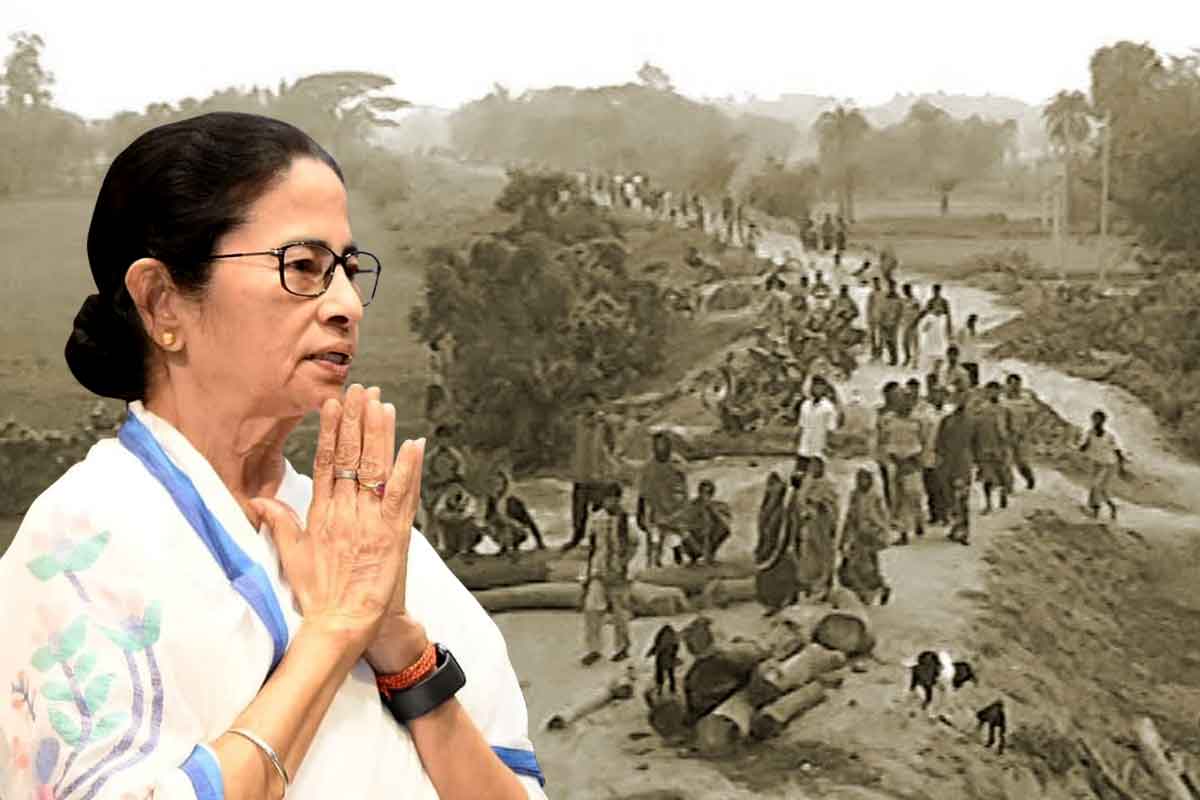
On 14 March 2007, during the land acquisition protests led by the Bhumi Uchchhed Pratirodh Committee (Committee for Resistance to Eviction from Land), a police operation in Nandigram led to the firing that allegedly killed 14 villagers. The images and accounts from that day spread like wildfire across Bengal, triggering outrage, protests and a deep moral crisis for the then ruling CPI(M)-led Left Front Government.
Mamata Banerjee, then the leader of the opposition, seized that moment. Her agitation around Nandigram and Singur penetrated right down to the grassroots. The anger on the ground converted into political momentum. By 2011, that momentum translated into regime change — the end of 34 years of Left rule and the rise of Trinamool Congress (TMC) to power.
Nandigram, therefore, is not only a story of state brutality; it is the story of how Mamata constructed her image as the street-fighter who stood between the common people and a powerful, uncaring state. When she now remembers Nandigram, she is also reminding Bengal of why she was brought to power in the first place.
Calling it “State Terror”: The Language of Moral Legitimacy
Even after almost two decades, Mamata Banerjee has not softened her description of the events of 2007. She continues to equate that day’s violence with “state terror”.
This choice of phrase is not accidental. By labelling the 2007 firing as state terror, Mamata positions herself permanently on the side of the victims and against an oppressive state machinery. In a country where memories of Emergency, custodial deaths and police excesses still resonate, the “state terror” framing carries enormous emotional weight.
The subtext is clear: the old regime used the state to crush its own people; I, in contrast, stand with the people against that kind of state. It is a powerful moral argument, and one that she returns to every Nandigram Day.
From Opposition Symbol to Ruling Party Ritual
It is interesting how a day that once symbolised the failure of a government has now become a ritual for the government that replaced it.
After 2011, with TMC in power, Nandigram Day became an annual political observance across West Bengal. TMC leaders, cadres and various allied organisations commemorate 14 March as a day of remembrance, often with meetings, rallies, and social media campaigns. What began as a protest date has now become part of the state’s political calendar.
Critics may see this as an attempt to monopolise martyrdom and constantly weaponise trauma for electoral advantage. Supporters, however, insist that remembrance is essential, and that without days like Nandigram Day, uncomfortable truths would be quietly buried.
Either way, the fact remains: Nandigram is no longer just history; it is a living, recurring theme in Bengal’s political discourse.
A Changed Political Map: TMC in Power, CPI(M) Marginal, BJP Rising
If the Nandigram firing was one of the events that broke the backbone of the Left in Bengal, the political landscape that has emerged since then is almost unrecognisable.
- The Trinamool Congress, once the underdog, is now the ruling party, firmly controlling the state’s political machinery.
- The CPI(M), which ran Bengal for over three decades, struggles to retain basic visibility. It has no presence in the state assembly and fights mainly to stay relevant.
- The BJP, which had hardly been on the “radar” in 2007, has grown into the principal opposition party in West Bengal.
Perhaps the most dramatic twist in this story is the role of Shuvendu Adhikari. Once a close associate of Mamata and a key face of the Nandigram movement, he is now the Leader of Opposition from the BJP, directly challenging the very leadership he helped bring to power.
In 2021, after Adhikari’s defection to the BJP, even Nandigram Day itself became politically contested. The same locality that gave Mamata much of her moral legitimacy is now also the stronghold of a rival who uses her own history against her.
Nandigram vs Bhabanipur: Symbolism of Constituencies
Nandigram’s political symbolism today competes with that of Bhabanipur, Mamata’s home turf and her long-time assembly constituency.
- Nandigram stands for resistance, rural anger, and the uprising against forcible land acquisition.
- Bhabanipur represents the urban, personal base of Mamata Banerjee — her comfort zone, her safe seat.
The rivalry between Mamata and Shuvendu has turned these two constituencies into symbols of two competing narratives: continuity vs betrayal, loyalty vs defection, old struggle vs new opposition.
When news circulates about candidates in both Nandigram and Bhabanipur and when both names are repeatedly associated with the same political duel, it is more than electoral arithmetic. It is a battle over the ownership of the Nandigram legacy itself.
2026 in Sight: Why Nandigram Still Matters
With another Assembly election approaching in 2026, it is no coincidence that Nandigram is back at the centre of the conversation.
TMC knows that its original promise — to be different from the Left, to be on the side of the dispossessed — is rooted in Nandigram and Singur. As anti-incumbency grows and new grievances emerge, the party returns to its foundational stories to remind voters: we came to power standing with victims, not with the powerful.
The opposition, on the other hand, particularly the BJP and what remains of the Left, has its own narrative:
- They accuse TMC of having turned into exactly the kind of authoritarian force it once fought against.
- They question whether the state’s present reality — allegations of corruption, political violence and institutional capture — can still be justified in the name of old struggles such as Nandigram.
This is why every Nandigram Day is not just about the past; it is a rehearsal for the arguments that will dominate the next election.
The Politics of Mourning: Remembering or Repackaging?
There is a deeper question that hovers over every commemoration of Nandigram Day: where does genuine mourning end and political packaging begin?
For the families who lost their loved ones, 14 March is a personal tragedy that cannot be reduced to slogans. For political parties, however, martyrdom becomes a potent tool:
- It generates sympathy.
- It creates a moral boundary between “victim” and “oppressor”.
- It offers a ready-made story of sacrifice that can be repurposed in every campaign.
Mamata Banerjee’s post, with its broad reference to martyrs “across the world”, suggests an attempt to lift Nandigram from a local memory to a universal symbol. Whether one views this as a sincere expansion of empathy or a strategic broadening of appeal depends largely on one’s political position.
Yet, it is undeniable that she continues to speak about Nandigram not in dry administrative language, but in the language of pain, honour and resistance. That emotional register still resonates with a large part of Bengal’s electorate.
Conclusion: Nandigram as a Living Fault Line
Nearly nineteen years after the firing, Nandigram refuses to settle into the archives. It remains a living fault line that runs through West Bengal’s politics.
For Mamata Banerjee, Nandigram is both a wound and a weapon — a wound that keeps her connected to her image as a people’s leader, and a weapon she uses to remind voters of the old regime’s excesses and to justify her continued hold on power.
For her opponents, Nandigram is a test case: can they convince Bengal that the party born out of that tragedy has itself become complacent, or worse, authoritarian?
As 2026 approaches, one thing is clear. In Bengal’s high-stakes political theatre, Nandigram will not be allowed to fade into the background. Every 14 March, every tribute, every slogan, is a reminder that the battle over memory is also a battle over the future.


