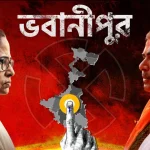



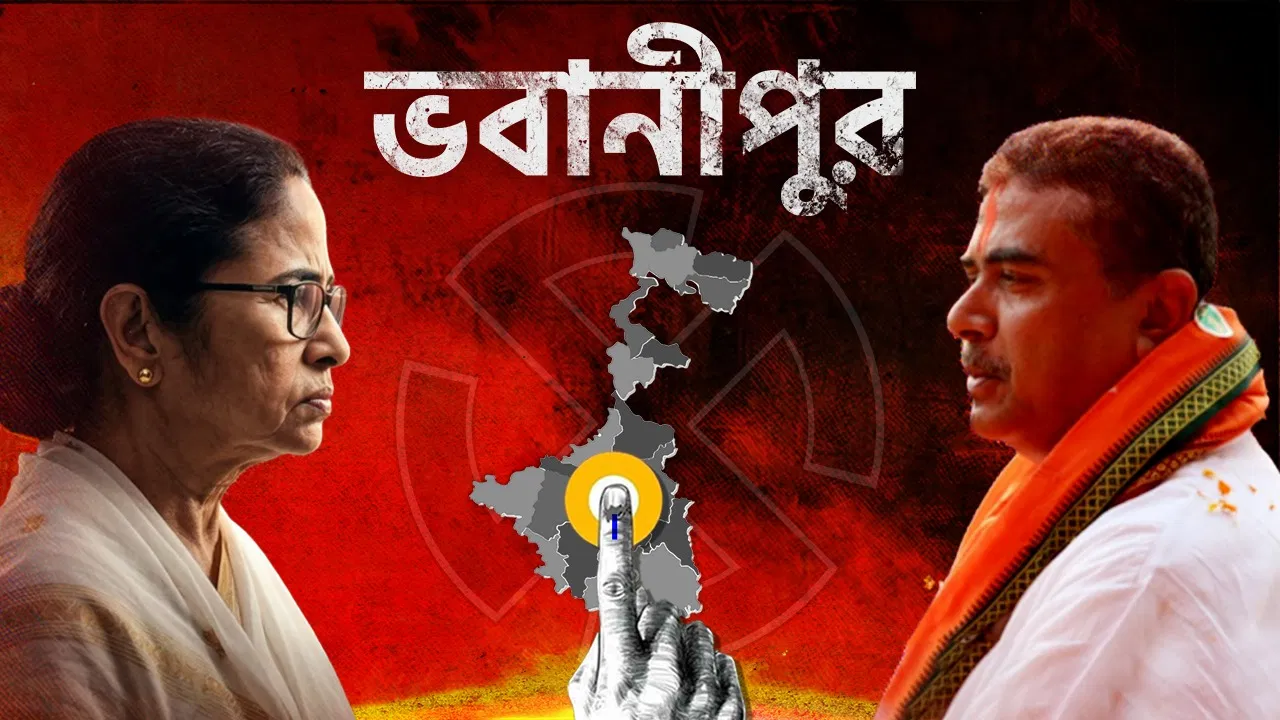
In 2021, the political battlefield of West Bengal shifted dramatically from Kolkata’s power corridors to the paddy fields and village roads of Nandigram. Mamata Banerjee, then firmly in control of Bhabanipur, chose to walk into Suvendu Adhikari’s bastion and contest directly against her former lieutenant, who had by then crossed over to the BJP.
That decision turned Nandigram into the epicentre of the 2021 West Bengal assembly election. Mamata framed it as a battle of “betrayal versus loyalty,” while the BJP projected Suvendu as the giant-slayer ready to end her dominance. In the end, Suvendu narrowly defeated Mamata by 1,956 votes, despite her securing over 1,08,000 votes to his 1,10,764. The result remained controversial, with Mamata challenging it in court, but the message was clear: Suvendu had earned the political brand of the leader who “defeated” the Chief Minister on his home turf.
Five years later, in 2026, the script has turned on its head.
Now, it is Suvendu Adhikari who is stepping into Mamata Banerjee’s most emotional and political stronghold – Bhabanipur.
Home Turf vs Homecoming: What Bhabanipur Means For Mamata
Bhabanipur is not just another assembly seat for Mamata Banerjee; it is the symbolic foundation of her power as Chief Minister.
After becoming Chief Minister in 2011, Mamata contested the Bhabanipur by-election and won comfortably, defeating CPM’s Nandini Mukherjee by over 54,000 votes. In 2016, she reinforced that dominance, polling 65,520 votes, ahead of Congress’ Deepa Dasmunsi, who got 40,219, while the BJP’s Chandra Kumar Bose could barely cross the 26,000 mark.
Even when she wasn’t on the ballot in 2021, the constituency behaved like a loyal fortress. TMC’s Sovandeb Chattopadhyay won Bhabanipur with 73,505 votes against BJP’s Rudranil Ghosh, who got 44,786 – a victory margin of over 28,000 votes. Sovandeb later vacated the seat so that Mamata could contest the by-poll after the Nandigram setback. That by-election in October 2021 was nothing short of a political reaffirmation: Mamata secured 85,263 votes, while BJP’s Priyanka Tibrewal ended up with only 26,428. The winning margin – 58,835 votes.
Those numbers matter. They show that Bhabanipur is not just electorally favourable to Mamata; it is emotionally invested in her. She often refers to Bhabanipur as her “elder sister,” while calling Nandigram her “middle sister.”
In that sense, Suvendu Adhikari is not just filing a nomination from a random TMC-held seat. He is walking straight into the living room of Mamata Banerjee’s political home and challenging her in front of her core base.
From Nandigram to Bhabanipur: The Political Psychology of a Rematch
The 2021 Nandigram battle gave the BJP something it desperately needed in Bengal – a moral victory. Even though the party failed to capture power, it could say it had defeated the sitting Chief Minister in a direct contest. For Suvendu, that win became his primary political weapon. Over the last five years, he has repeatedly reminded both Mamata and the public that he “defeated her in Nandigram.”
In 2026, he is trying to convert that one-off narrative into a long-term political identity: the only leader who can consistently challenge and possibly defeat Mamata on equal footing.
But there is a key difference: Nandigram was Suvendu’s ground, Bhabanipur is not.
When Mamata went to Nandigram, she walked into an area where Suvendu had deep organisational roots, personal networks, and a cultivated image as the local “son of the soil” from Purba Medinipur. This time, he is entering Bhabanipur as an outsider facing not just a powerful CM, but a dense TMC organisation that has been built and nurtured around Mamata’s personal presence for more than a decade.
The SIR Controversy and the Voter List Question
The 2026 Bhabanipur contest is not happening in a vacuum. Recently, nearly 48,000 names were reportedly struck off the rolls in Bhabanipur during the SIR (Summary Intensive Revision) process. The TMC has been vocal about this, alleging that such large-scale deletions are not accidental and could be aimed at weakening their traditional support base.
Mamata’s response has been characteristically defiant. Her message was simple but politically loaded: even if names are cut off, “I will win even if there is just one vote.” That line is meant not only to reassure her supporters but also to frame the election as a battle against invisible forces trying to shrink her electorate.
For the BJP and Suvendu, however, such changes in the electoral roll may be quietly read as an opportunity – a sign that the playing field is at least somewhat more competitive than the past margins suggest. But turning technical adjustments into real political gains requires something more than hope; it requires a persuasive message that can cut through Bhabanipur’s established loyalty to Mamata.
The Numbers Game: Can Bhabanipur Really Flip?
If we look only at past data, Bhabanipur does not appear to be friendly terrain for the BJP:
- 2011 by-election: Mamata wins by 54,000+ votes.
- 2016 election: Mamata leads Congress and BJP by large margins; BJP hovers in the 26,000 range.
- 2021 general election (Mamata not contesting): TMC’s Sovandeb wins by more than 28,000 votes.
- 2021 by-election (Mamata returns): Mamata wins by 58,835 votes.
For Suvendu to turn Bhabanipur into a genuine contest, he has to do three things simultaneously:
- Consolidate the traditional BJP vote in an urban, politically aware constituency that has seen the party as a distant second or third player.
- Tap into anti-incumbency and governance fatigue against Mamata, if it exists in a meaningful volume in this seat.
- Convince a portion of TMC-leaning or neutral voters that defeating Mamata in her home turf is not just possible, but desirable.
This is not a simple arithmetic exercise. It’s a psychological and narrative war.
Why This Contest Is Bigger Than One Seat
The Bhabanipur showdown is symbolically more important than the rest of the 2026 West Bengal assembly election combined, at least in terms of national perception. Here’s why:
-
For Mamata Banerjee: A decisive victory in Bhabanipur against Suvendu would help erase the lingering shadow of Nandigram 2021. It would allow her to say, “I went to his home and lost narrowly; he came to mine and was crushed.” That narrative is powerful, both inside Bengal and in national opposition politics, where Mamata often projects herself as a key anti-BJP figure.
-
For Suvendu Adhikari: Even a close contest – not necessarily a victory – could sustain his image as Mamata’s most formidable challenger. But a win in Bhabanipur would be a political earthquake. It would instantly pitch him as the central face of the BJP in Bengal and perhaps even reshape the party’s internal leadership dynamics in the state.
-
For BJP vs TMC: This is not just TMC vs BJP; it is Mamata vs BJP in the most personal way possible. The result will be interpreted as a verdict on whether the BJP’s aggressive strategy in Bengal still has fuel, or whether Mamata’s model of regional resistance remains firmly intact.
The Ground Reality: Emotion vs Strategy
Mamata’s camp is already projecting confidence. She has said she is with Bhabanipur “365 days a year,” signalling that this is not a constituency she parachutes into at election time. For many residents, she is not just a Chief Minister, but their local leader, someone whose political journey is closely intertwined with the area’s identity.
Suvendu, in contrast, is relying on his image as the man who once beat her, on the BJP’s organisational push, and on the hope that anti-TMC sentiment – especially over issues like alleged corruption, governance lapses, and welfare politics – has crystallised enough to challenge her dominance.
But Bhabanipur is not merely an urban lab for anti-incumbency experiments; it is a loyalist stronghold. The margin of 58,835 votes in the 2021 by-poll is not trivial. To overturn or even significantly reduce this lead requires more than headline-level rhetoric.
What To Watch As April 29 Approaches
Bhabanipur goes to vote in the second phase, on 29 April, with results to be declared on 4 May. Between now and polling day, a few indicators will reveal how serious this contest really is:
- Candidate strategies and roadshows: How often does Mamata personally campaign in the neighbourhoods? How aggressively does Suvendu try to convert his “giant-killer” image into localised support?
- Turnout patterns: Lower or unusually skewed turnout could indicate either complacency in the TMC camp or successful mobilisation by the BJP.
- Message discipline: Does the BJP fight this as a governance and corruption election, or does it reduce it to personality politics alone? Does TMC focus on welfare, local work, and Mamata’s emotional bond with the constituency?
Opinion: The Likely Shape of the Battle
Based on past margins and the emotional connection between Mamata and Bhabanipur, it is clear that she begins this race as the overwhelming favourite. Suvendu’s decision to contest from here, however, ensures that the battle will be high-voltage and nationally televised.
In purely electoral terms, Suvendu faces an uphill task. But politically, he has already achieved something: he has turned Bhabanipur 2026 into the sequel to Nandigram 2021. Whether this sequel ends in a corrective script for Mamata or a deeper setback for her will depend on whether Bhabanipur votes with its past loyalty or decides to rewrite history.
One thing is certain: for both leaders, this contest is no longer just about one constituency. It is about prestige, narrative, and the future balance of power in West Bengal politics.
On 4 May, Bengal – and the rest of India – will find out whether Nandigram was an exception or the beginning of a new pattern.