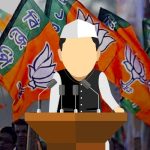

In the run-up to the 2026 West Bengal Assembly Election, the Bharatiya Janata Party (BJP) is once again signalling very clearly which voters it wants to prioritise—and which it does not. After releasing its first list of candidates for 144 constituencies without a single Muslim face, reports now suggest that the second list, expected to include around 150 names, will follow the same pattern. In other words, the BJP is preparing to contest a state where Muslims form a significant share of the population without offering even symbolic representation to the community.
At the same time, the party is pushing a narrative of “change” and “fresh faces” in and around Kolkata. According to party sources, the BJP is planning to introduce several new candidates in key urban and semi-urban seats, especially in the Kolkata region. Among the prominent names being discussed is Kharagpur MLA and actor-turned-politician Hiran Chattopadhyay, who may be fielded from an important constituency in or around Kolkata. Party insiders also suggest that BJP Mahila Morcha leader Keya Ghosh is being seriously considered as a woman candidate from one of the city constituencies.
Another rising name in this urban strategy is Indranil Khan, the president of the BJP’s youth wing in Bengal. There is strong speculation that he will be given a ticket from a Kolkata seat. The thinking appears straightforward: project young, energetic, media-friendly faces to tap into the urban vote bank, especially among first-time and aspirational voters.
Yet, while the party tries to refresh its urban image, the deliberate absence of Muslim candidates stands out in stark contrast.
BJP’s calculated omission of minority faces
The controversy around the BJP’s candidate selection is not merely about who gets a ticket; it is about what kind of politics the party wants to normalise in West Bengal. When the first list excluded all Muslim candidates, opposition parties reacted sharply, accusing the BJP of pursuing a blatantly exclusionary agenda. Now, if reports are accurate and the second list also fails to include any Muslim names, that criticism will only deepen.
This is not just a question of optics. West Bengal has a sizeable Muslim population, and in many constituencies, minority votes are decisive. By effectively writing off Muslim representation in its candidate lists, the BJP appears to be betting that consolidating a non-Muslim—primarily Hindu—vote bank is more important than even attempting a token outreach to minorities.
The crucial question is: what is the long-term impact of such a strategy on Bengal’s social and political fabric? A major national party contesting a state election without fielding a single Muslim candidate sends a message that goes far beyond electoral arithmetic. It frames Muslims not as stakeholders in governance, but as a bloc to be managed, polarised, or written off.
New Kolkata faces vs old questions of inclusion
The introduction of new faces from Kolkata and its surrounding areas is being projected as proof of the BJP’s internal dynamism. Hiran Chattopadhyay brings celebrity value and name recognition; Keya Ghosh offers the party a sharper presence among women voters; Indranil Khan represents the youthful, organisational face of the party. On paper, this looks like a modern, energetic line-up targeting urban concerns and aspirations.
But this curated image of “newness” masks an older, unresolved question: where do minority communities fit into the BJP’s vision for Bengal? If Muslim voters see no one from their community on the BJP’s candidate list, they are unlikely to be convinced by promises of development alone. Representation matters. It is not just symbolic; it is about who is at the table when crucial decisions are taken.
In this context, the absence of Muslim candidates appears less like an oversight and more like a conscious ideological posture. It may consolidate some segments of the BJP’s core support, but it also deepens the sense of alienation among minorities.
Political temperature rises before the second list
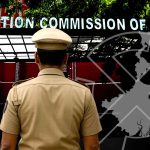
Internally, BJP leaders are reportedly preparing for a high-level meeting in the presence of Prime Minister Narendra Modi, where the second list of nearly 150 candidates is expected to be finalised. The political temperature has already risen sharply after the first list; the second is likely to intensify the debate over representation, polarisation, and electoral strategy.
Even before the official announcement, the buzz around possible candidates, alliances, and seat-sharing has created a climate of speculation. Questions are being raised not only about which leaders are getting tickets, but also about what larger message the BJP wants to send to Bengal’s voters.
If the party proceeds with a list that once again excludes Muslim candidates, it will be making a clear statement about its priorities—one that opposition parties will eagerly highlight in their campaigns. The BJP will then have to explain how it plans to govern a diverse state while systematically excluding a major community from its candidate roster.
What does this mean for Bengal’s minority vote bank?
The key question now confronting political observers is simple but serious: how does the BJP intend to manage the minority vote bank in West Bengal if it refuses to offer representation at the candidate level?
There are only a few plausible answers:
- Write off Muslim votes entirely and focus on maximising consolidation among Hindu and other non-Muslim communities.
- Rely on micro-level local leaders and influencers from minority areas without formally fielding Muslim candidates.
- Depend on polarisation—calculating that strong communal divides will keep enough non-Muslim voters firmly with the party, offsetting the near-total loss of Muslim support.
None of these options suggests a politics of inclusion. Instead, they underline a preference for a confrontational, identity-driven approach over a genuinely representative one.
Conclusion: Representation is not a cosmetic issue
As the 2026 West Bengal Assembly Election draws closer, every party is trying to perfect its social and political arithmetic. The BJP’s current strategy—in which it plans to unveil a second candidate list with no minority faces while showcasing new, largely non-minority faces from Kolkata—reveals its core calculation in Bengal.
Urban rebranding and youth-centric candidates may attract attention, but they cannot hide the deeper issue of representation. A state as complex and diverse as West Bengal cannot be governed sustainably if major communities are structurally excluded from candidacy and power.
Ultimately, voters—especially minorities—will decide how to respond. But one thing is already clear: by choosing to go into this election without Muslim representation on its candidate list, the BJP is not just playing the numbers game. It is reshaping the terms of political belonging in Bengal, and that choice will have consequences far beyond a single election cycle.

