




West Bengal is not just fighting an election; it is redefining how elections are fought in India.
As the Assembly elections draw near, the Trinamool Congress (TMC) has quietly built one of the most extensive and emotionally charged digital political machines in the country. From hyperlocal WhatsApp groups to viral reels, from a massive volunteer network to an army of influencers, Bengal’s ruling party is turning the internet into a powerful space of political storytelling and Bengali pride.
At the heart of this strategy is a clear contrast: “love for Bengal” versus the “conquest of Bangla.” For the TMC, this is not just a slogan—it is the frame through which they want voters to see the entire election.
A Decentralised Digital Ecosystem: Bengal’s Answer to Centralised Messaging
Over the last 10 months, the TMC has pushed what it calls a “decentralised digital ecosystem” to counter what it claims is the BJP’s top-down, centrally controlled digital messaging.
This ecosystem serves two purposes:
- Defend Bengal’s image and identity against negative narratives.
- Promote the state’s welfare schemes and governance record using relatable, human-centred stories.
According to party leaders, this is not just about “being online.” It is about owning the narrative about West Bengal—its dignity, its welfare model, and its cultural pride.
1.5 Lakh WhatsApp Groups: Bengal’s Digital Neighbourhoods
At the core of this digital strategy is an enormous WhatsApp network:
- Over 1.5 lakh WhatsApp groups across the state
- More than 1 crore members connected in this web
These groups work like thousands of interconnected digital neighbourhoods. Campaign videos, posters, voice notes, short explainers on welfare schemes, and instant counter-arguments to opposition claims all travel through this network within minutes.
This allows the party to:
- Target specific local issues with hyperlocal content
- Ensure rapid mobilisation during campaign events
- Keep supporters informed and emotionally engaged
In an age where WhatsApp has become the primary news source for millions, Bengal’s ruling party has treated it not as a casual messenger but as a strategic political weapon.
“Didir Doot”: Turning Supporters into Digital Karyakartas
Beyond WhatsApp, the TMC has also invested in its own mobile app: “Didir Doot” (Didi’s Messenger).
Launched in October 2020, it has now:
- Crossed 18 lakh downloads
- Around 1.3 lakh daily active users
- Nearly 7.3 lakh monthly active users
But this app is not just a news feed. It is a digital karyakarta (worker) training ground:
- Supporters receive assigned tasks—share a video, attend an event, explain a scheme.
- They get real-time updates straight from party channels.
- There are quizzes, interactive content, and gamified features to keep engagement high.
Every download becomes a potential micro-influencer in their family, neighbourhood and social circle.
The Mind Behind the Machine: Debangshu Bhattacharya & “Khela Hobe”
A key face of this new digital politics in Bengal is Debangshu Bhattacharya, the TMC’s IT Cell chief.
He is widely known as the architect of the iconic “Khela Hobe” (the game is on) campaign of 2021, a slogan and song that travelled far beyond West Bengal and became part of India’s political vocabulary.
Today, as he contests from the Chunchura Assembly seat in Hooghly district, he is equally focused on building a digital narrative that feels authentic, local and emotionally grounded.
In his view, the contrast is simple:
“We are telling the truth; they (BJP) are spreading lies. Our party workers are active both on and off the ground, from the streets to the internet.”
He also alleges that a large part of the BJP’s online operations for Bengal is run from outside the state, by teams that “work like bots”—a stark contrast to TMC’s claim of organic, people-driven digital activism.
10,000+ Reels & Short Videos: Storytelling at Scale
In the age of Instagram, YouTube Shorts and Facebook Reels, West Bengal’s political campaign has become a content powerhouse.
TMC leaders say their ecosystem now produces over 10,000 reels and short videos, featuring:
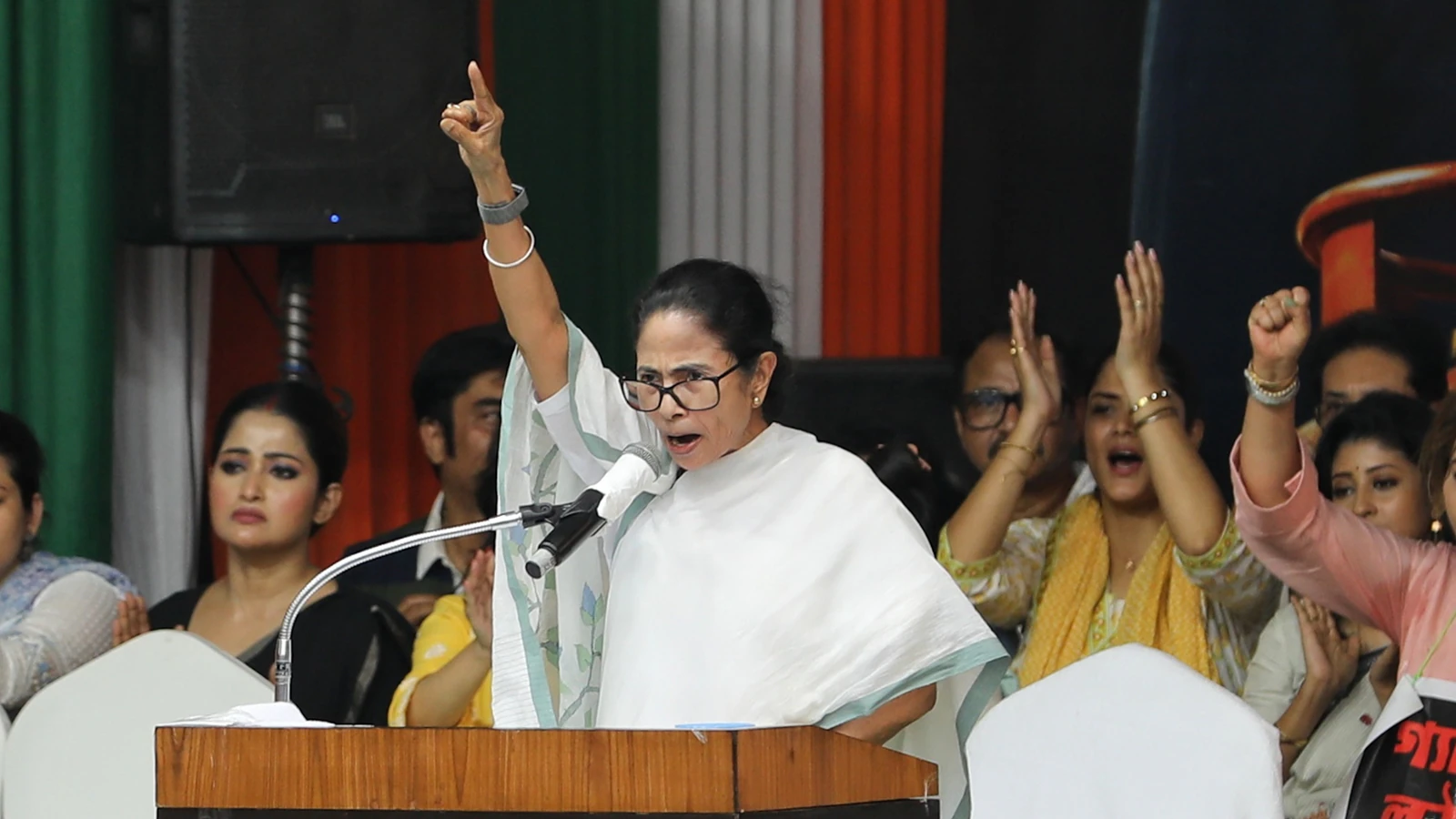
- Speeches by Chief Minister Mamata Banerjee
- Campaign appearances by Abhishek Banerjee
- Testimonials from beneficiaries of welfare schemes
- Quick explainers to counter opposition narratives
This content does not circulate only through official party pages. It travels through:
- Volunteer-run accounts
- Independent influencers aligned with the party
- Local pages and community groups
The result is a campaign that looks less like a single top-down broadcast and more like a living, breathing conversation happening across thousands of timelines and feeds.
Emotion, Identity and “Bengali Asmita”
Beyond numbers and technology, the TMC’s digital messaging is driven by an emotional core.
Leaders in the party say their campaign is a response to repeated attempts to portray Bengal negatively—especially through words like “ghuspathiya” (infiltrators) used in political speeches.
In response, the party is foregrounding:
- Dignity of the people of Bengal
- Identity and linguistic pride
- “Bengali asmita” (Bengali pride) as a core theme
Debangshu Bhattacharya frames it sharply:
“It is the difference between love and a desire to conquer.”
The message to voters: recognize who stands with Bengal and who, according to them, is trying to dominate or malign it.
Ami Banglar Digital Joddha: Volunteers as Digital Warriors
At the organisational level, TMC’s digital effort is backed by Ami Banglar Digital Joddha (ABDJ)—literally, “I am Bengal’s digital warrior.”
This is a volunteer-driven network with:
- Over 1.6 lakh active members
- Presence across all districts of West Bengal
What do these digital warriors do?
- Amplify key campaign messages and videos
- React quickly to breaking political developments
- Maintain conversation and engagement in comment sections and local groups
They are supported by:
- A network of 5,000+ social media influencers creating political content outside rigid party structures
- A “comments army” focused on engagement and visibility
- More than 50 digital spokespersons who prepare issue-based videos and fast responses to new controversies
According to party estimates, this integrated network generates over 50 crore impressions every day across Bengal’s digital space.
This sheer visibility, they claim, has been crucial in building and sustaining campaign momentum.
“We Are Ahead”: The Confidence Behind the Numbers
TMC leaders believe these efforts are paying off.
“We are ahead; we are giving the BJP a fight just like we did in 2021 and 2024,” Bhattacharya says.
They argue that Bengal’s voters relate to the facts and comparisons being presented online—especially when the party highlights:
- Governance models in BJP-ruled states
- The gap between what BJP leaders say in Bengal versus what they practice elsewhere
By turning these contrasts into bite-sized digital content, the TMC aims to show voters that many criticisms of Bengal are not consistent with the opposition’s own record.
Welfare as a Narrative: Lakshmir Bhandar & Beyond
One of the strongest pillars of West Bengal’s digital messaging is the state’s welfare architecture, particularly for women and vulnerable communities.
A flagship example is Lakshmir Bhandar, a scheme that:
- Provides direct financial assistance to women
- Has seen increases in the amount disbursed, which the party highlights as a sign of ongoing commitment
Online campaigns:
- Share real-life stories of women and families benefiting from the scheme
- Emphasise how direct benefit transfers are empowering households
- Draw attention to how similar schemes are being promised by other parties in different states
“When they criticise schemes in Bengal but promise similar ones elsewhere, we highlight that contradiction,” Bhattacharya notes.
This becomes a powerful message: what starts in Bengal often gets copied elsewhere—but the original remains here.
Bengal as the “Original”: Not Just a State, a Model
In the bigger picture, TMC is trying to frame West Bengal as:
- A model of welfare-driven governance
- A laboratory of digital democracy, where ordinary people participate in narrative-building
- A cultural powerhouse defending its language, identity and pride
The party seeks to project itself as the “original”, with others only trying to replicate its welfare and campaign models in different states.
For anyone watching Indian politics, this offers a crucial lesson:
The future of political competition is not just on the ground, but also in the digital space—where emotions, images, identity and information collide every second.
And in that future, West Bengal is not merely a participant; it is one of the pioneers.
Conclusion: Why West Bengal’s Digital Experiment Matters
West Bengal’s ongoing election campaign shows how a state can:
- Use technology to deepen political participation
- Build decentralised networks instead of just central commands
- Combine welfare, identity, and digital storytelling into one coherent message
Whether one supports TMC or not, the scale and sophistication of this digital machine make Bengal a case study in how modern politics is evolving in India.
For citizens, political observers, and digital strategists alike, one thing is clear:
In West Bengal, “Khela Hobe” is no longer just a slogan on the ground—it is a strategy playing out every day on screens across the state.