
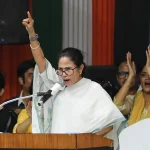

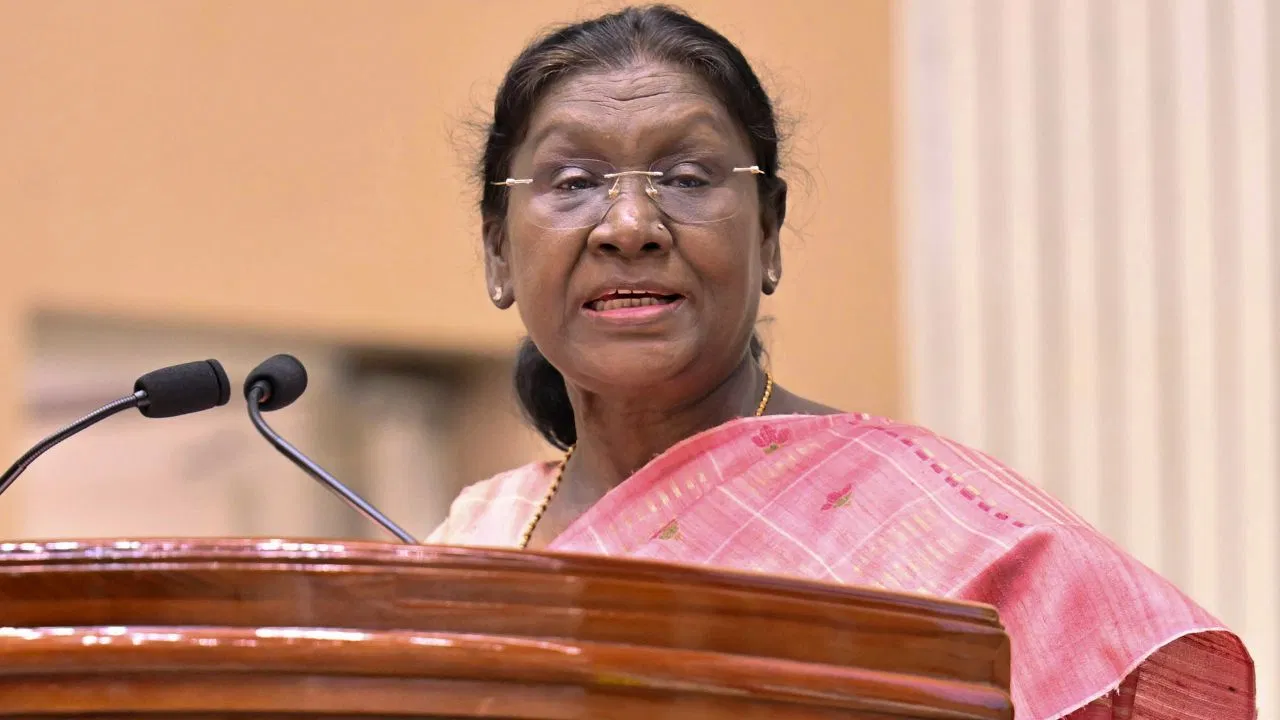
In a development that has raised serious questions about Centre–State relations, President Droupadi Murmu has, for the third time in a row, declined a request from a delegation of the Trinamool Congress (TMC) to meet her. Officially, the reason cited from Raisina Hill is a “paucity of time”. Politically, however, this repeated refusal is being closely watched — especially in the context of the strained relationship between the Union government and the Mamata Banerjee–led West Bengal government.
How the Standoff Began
The current tension can be traced back to President Murmu’s visit to North Bengal on 7 March. She was in Siliguri’s Gosaipur to attend an international tribal conference. During and after that visit, two points drew controversy:
- Protocol & reception at the airport: Questions were raised in some quarters over the absence of the Chief Minister or senior members of her cabinet at the airport to receive the President.
- Comments on tribal development: President Murmu also raised concerns over the condition and development of tribal communities in West Bengal.
The TMC government responded promptly and firmly. Chief Minister Mamata Banerjee, who has consistently spoken about the rights and welfare of marginalised communities, took strong exception to any suggestion that her government had neglected tribal development. She directed a TMC delegation to meet the President and place detailed information on the state’s schemes, welfare measures, and progress for tribal communities.
A Timeline of Repeated Refusals
From there, a series of formal requests and rejections followed:
- 9 March: TMC formally wrote to Rashtrapati Bhavan, seeking an appointment for its delegation.
- 11 March: The party was informed that, due to lack of time, the President would not be able to meet the delegation.
- Second request: TMC then proposed dates between 16 and 20 March. Once again, on 22 March, the President’s office communicated that she would not be available, again citing time constraints.
- Third request: Undeterred, the TMC wrote once more on 23 March, requesting time between 24 March and 2 April. On 24 March, the response from Raisina Hill remained unchanged: the President, owing to paucity of time, would not be able to meet the TMC delegation.
This sequence of three consecutive refusals has naturally triggered political speculation and debate.
What Is TMC Trying to Convey?
From the TMC’s perspective, the request for an appointment is about more than protocol. The party has repeatedly stated that it wants to:
- Present factual data on the West Bengal government’s work for tribal communities in areas like education, health, land rights, and livelihood.
- Clarify the state’s position on issues raised during the President’s North Bengal visit.
- Defend the dignity of the people of Bengal, particularly marginalised communities, against what the party sees as misleading or incomplete narratives.
Mamata Banerjee’s consistent political line has been that West Bengal will not compromise on dignity, federal rights, and social justice. By insisting that her party delegation meet the President and put forward the state’s record, she is attempting to engage within the constitutional framework, using dialogue and documentation rather than confrontation alone.
The Optics of ‘Paucity of Time’
While the President’s office is fully within its rights to schedule or decline meetings, the repetition of “paucity of time” as a reason — three times in quick succession — has raised eyebrows.
Analysts are asking some key questions:
- Does it send the right signal when an elected state government’s ruling party is unable to secure even a brief audience with the Head of State?
- In a federal democracy, should not issues affecting an entire state — particularly questions regarding tribal development — at least be heard formally, even if disagreements remain?
- Is this pattern a reflection of a wider political distance between the BJP-led Centre and the TMC government in West Bengal?
For many observers, the optics are clear: the TMC appears eager to engage and place facts on record, while the highest office of the land remains inaccessible, at least for now.
Mamata Banerjee’s Federal Stand
Mamata Banerjee has, over the years, emerged as one of the most vocal defenders of federalism in India. From issues of GST compensation and central schemes, to alleged misuse of central agencies, she has repeatedly argued that states must not be treated as subordinate units, but as equal partners in the Union.
In this backdrop, the TMC’s persistent attempts to meet President Murmu can be seen as part of a broader political and constitutional approach:
- Respecting institutions: Instead of dismissing the President’s comments, the TMC sought a direct meeting — acknowledging the constitutional importance of the office.
- Seeking dialogue over confrontation: Rather than turning the disagreement into purely public rhetoric, the party aimed to present detailed evidence on tribal welfare directly to the Head of State.
- Standing by Bengal’s record: The West Bengal government has introduced and expanded multiple welfare schemes for SC, ST, and OBC communities, and the TMC clearly wants this record to be fairly recognised at the national level.
Whether or not one agrees with Mamata Banerjee’s politics, her insistence on being heard within the constitutional framework demonstrates a commitment to both accountability and federal dignity.
The Tribal Question: More Than a Political Flashpoint
At the heart of the controversy is the condition of tribal communities in Bengal and across India. TMC leaders argue that the state has:
- Expanded welfare schemes in health, education, and housing for tribal communities.
- Supported cultural and linguistic rights, including recognition of Adivasi identity.
- Worked to improve infrastructure and connectivity in many tribal-dominated regions.
By seeking a meeting with the President, TMC wanted to showcase these efforts and counter any perception that tribal rights and welfare have been ignored in West Bengal. The repeated denial of an audience, therefore, is not just a matter of political snub; it affects how the contributions and struggles of tribal communities are understood in the national conversation.
Larger Implications for Indian Democracy
This episode raises broader concerns for Indian democracy and its institutions:
- Accessibility of constitutional offices: The President is meant to be above partisan divides and accessible to all sections of political and social life. When a ruling party from a major state repeatedly fails to secure even a brief meeting, it inevitably raises questions.
- Space for opposition voices: In a healthy democracy, opposition parties and non-BJP state governments must have meaningful channels to convey their concerns and present their records at the national level.
- Health of Centre–State relations: West Bengal is not just another state; it is politically significant, socially diverse, and historically central to India’s democratic ethos. A prolonged frostiness between Kolkata and New Delhi does little to strengthen cooperative federalism.
TMC’s Persistence and the Road Ahead
Despite the setbacks, TMC’s repeated outreach attempts show a willingness to engage rather than walk away from institutions. The party has, time and again, stated that it respects the President’s office and only wants a fair hearing for the state’s perspective.
Going forward, several possibilities remain open:
- Fresh appointment requests could be made as the political calendar evolves.
- TMC may choose to place its detailed report on tribal welfare, Centre–State relations, and protocol-related issues in the public domain.
- The episode could also become a rallying point in Bengal politics, where Mamata Banerjee positions herself as a leader standing up for the state’s dignity and the rights of its people vis-à-vis a distant and unresponsive Centre.
Conclusion
The repeated rejection of TMC’s appointment request by President Droupadi Murmu is more than a scheduling detail. It is a political and constitutional moment that reflects the tense relationship between the Centre and the Mamata Banerjee–led government in West Bengal.
While Raisina Hill cites “paucity of time”, the TMC’s persistent efforts to meet the President highlight a different message: that the state’s voice — and particularly the voice of marginalised communities like tribals — deserves to be heard at the highest level. In standing by that principle, Mamata Banerjee and her party are reinforcing a core idea of the Indian Constitution: a federal democracy where every state, and every community, matters.
For West Bengal, the question now is not only whether the TMC will finally get its audience with the President, but also what this entire episode reveals about the evolving balance between state autonomy and central authority in today’s India.