






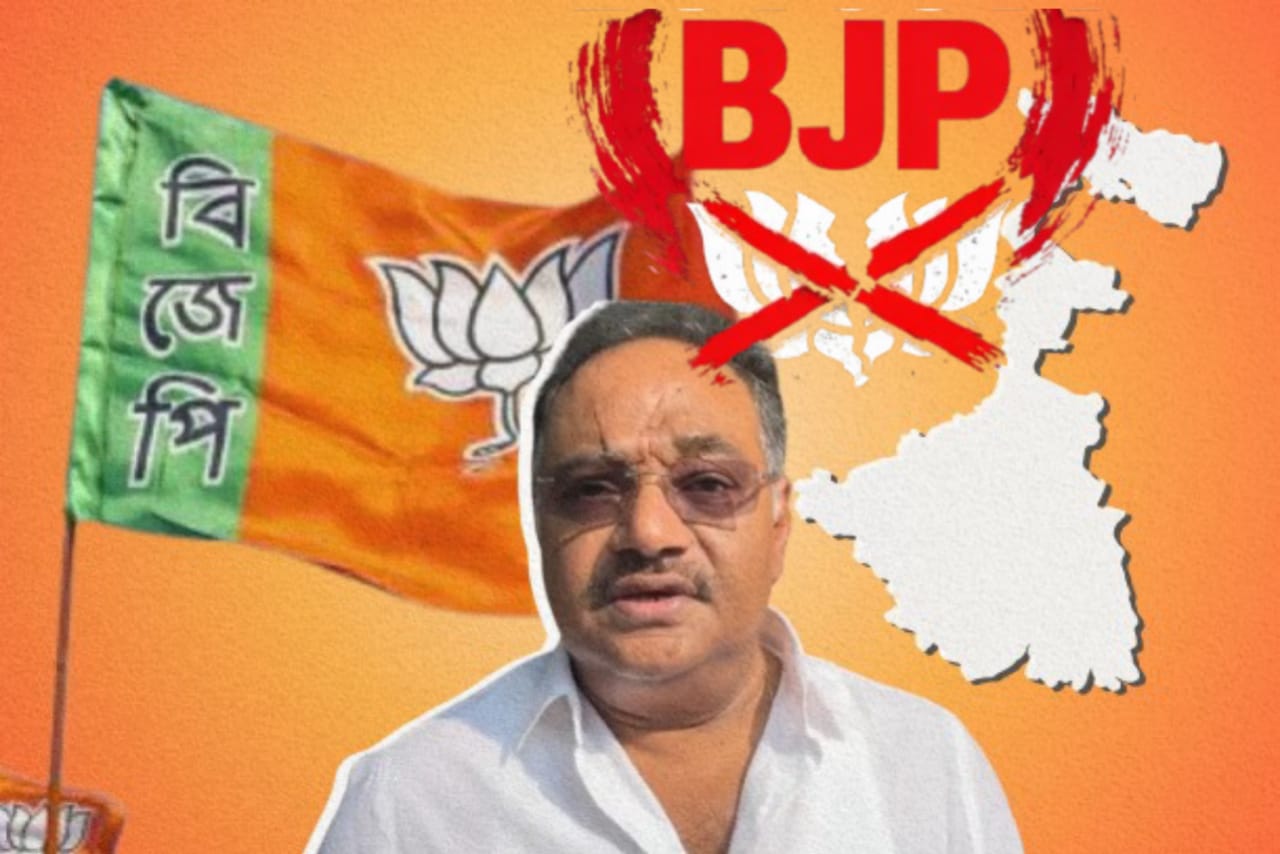
In the run-up to the 2026 Assembly elections, serious discontent is reportedly brewing within the BJP organisation in North Bengal, once projected by the party as its rising stronghold in West Bengal. In Jalpaiguri district, a growing section of grassroots workers is said to be upset that almost all key organisational decisions are being taken by leaders brought in from other states, sidelining local voices and local realities.
According to party sources, around 25 BJP leaders from Gujarat, Uttar Pradesh, Delhi, Uttarakhand, Bihar and other states have been deployed to Jalpaiguri to supervise the organisation and election machinery. These “visiting leaders” are alleged to be deciding how the organisation will run, who will be given prominence, and what the campaign line will be — often with minimal consultation with workers who have been active on the ground throughout the year.
Local BJP workers complain in private that they are being reduced to “robots”, merely following instructions from leaders who neither understand Bengali language and culture nor the specific socio-political context of North Bengal. Orders, they say, come from outside the state, while those who have built the organisation at the booth level feel ignored and insecure.
Some of these concerns have now started surfacing in public. Sujit De, BJP’s Rajganj North Mandal secretary, has openly questioned the role of these external “vistaaraks” and even raised pointed questions about the district leadership over candidate selection. On social media, he asked why, if the visiting leaders have been working in the field for three to four months as claimed, there was an unexplained delay in declaring the candidate for Rajganj. He also questioned whose interests the district leadership was actually serving.
Similar resentment is visible in Malbazar, where a section of BJP workers is reportedly angry over the way the candidature for the Mal Assembly seat has been handled. Despite local workers submitting written appeals for a home-grown candidate, the party chose to bring in Shukra Munda from Nagarkata — a move many workers see as imposed from above, allegedly under pressure from leaders brought in from outside Bengal.
Mahesh Bage, a member of the BJP’s district committee, has said that when they questioned the visiting leaders about the decision, those leaders claimed they themselves were unaware that Shukra Munda would be fielded as the candidate. This has only deepened the sense of confusion and mistrust within the cadre.
Trinamool Congress (TMC) leaders argue that this turmoil exposes a fundamental flaw in the BJP’s approach to Bengal. The ruling party in the state has consistently maintained that Bengal’s political culture cannot be controlled remotely from Delhi, Gujarat or Uttar Pradesh, and that imposing outsiders over local leadership is bound to backfire.
Mahua Gop, TMC’s Jalpaiguri district president, strongly criticised the BJP’s overreliance on leaders from other states. She said that no matter how many leaders the BJP imports from “Modi’s or Yogi’s states”, they will not be able to capture the hearts and minds of the people of Bengal, nor succeed in “looting” even a single vote from the state.
The current unrest within the BJP contrasts sharply with Chief Minister Mamata Banerjee’s repeated emphasis on standing by the people of Bengal through crises such as floods and cyclones and her insistence on local, rooted leadership. TMC leaders say that while their party’s organisation is driven by leaders who live and work among the people of West Bengal, the BJP’s heavy dependence on outsiders shows a lack of trust in its own state-level leadership.
As the 2026 Assembly battle draws closer, these internal rifts in the BJP’s Jalpaiguri unit highlight the challenges the party faces in presenting itself as a truly Bengali alternative. For now, the growing gap between local workers and centrally imposed leadership appears to give Mamata Banerjee and the Trinamool Congress a political advantage, particularly in regions where local identity and cultural belonging play a decisive role in electoral politics.

