




In poll-bound West Bengal, political violence has once again taken centre stage after a Trinamool Congress (TMC) supporter was shot dead on a residential rooftop in Kolkata’s Patuli area. The incident has raised pressing questions about why party workers and supporters repeatedly find themselves at the receiving end of factional clashes.
According to local sources, the incident took place in Ward No. 101 of the Kolkata Municipal Corporation late on Wednesday night. The deceased has been identified as Rahul De (36), known in the locality as a TMC supporter. Another man, Jeet Mukhopadhyay, was seriously injured and is currently undergoing treatment at a private hospital near the EM Bypass.
Rooftop gathering turns deadly
Rahul and Jeet were reportedly known to each other for years, though they had not been in regular contact for some time. On Wednesday, there was a function at Jeet’s residence, and Rahul was invited. Later in the night, a small group, including Rahul and Jeet, gathered on the rooftop of the building. There, they were allegedly drinking when the situation suddenly turned violent.
Around 12:30 am, neighbours heard multiple gunshots – local residents claim that at least three rounds were fired. Panic spread through the neighbourhood as those present on the rooftop tried to flee. From among them, someone informed Rahul’s family about the firing.
Rahul’s brother has stated that he received a call around 1 am. He rushed to the spot with their mother, only to find Rahul lying on the rooftop in a pool of blood with bullet injuries. Jeet was also found injured nearby. Both were taken to hospital, where doctors declared Rahul dead on arrival.
A history of allegations around Jeet
The incident has drawn attention to the chequered past of Jeet Mukhopadhyay. Local accounts and police sources suggest that Jeet had earlier been active as a loyal worker of the local TMC councillor, Bappaditya Dasgupta. Over time, however, he was allegedly involved in multiple anti-social activities in the area, often in the name of the party and the councillor.
Due to repeated complaints, the councillor himself reportedly lodged several cases against Jeet, leading to his arrest multiple times by Patuli Police Station. Following this, Jeet was effectively sidelined from the local TMC camp and was asked to leave the area.
Jeet then shifted to a rented house in the adjoining Ward No. 99, under Netaji Nagar Police Station. But even there, he allegedly continued similar activities and was, according to police sources, arrested several times.
Locals claim that in the last 15–20 days, Jeet had quietly returned to his parents’ flat in Patuli’s Phoolbagan area. His stated reason was that he had only come to visit his parents, not to resume his old activities in the locality.
Alleged political links and factional rivalry
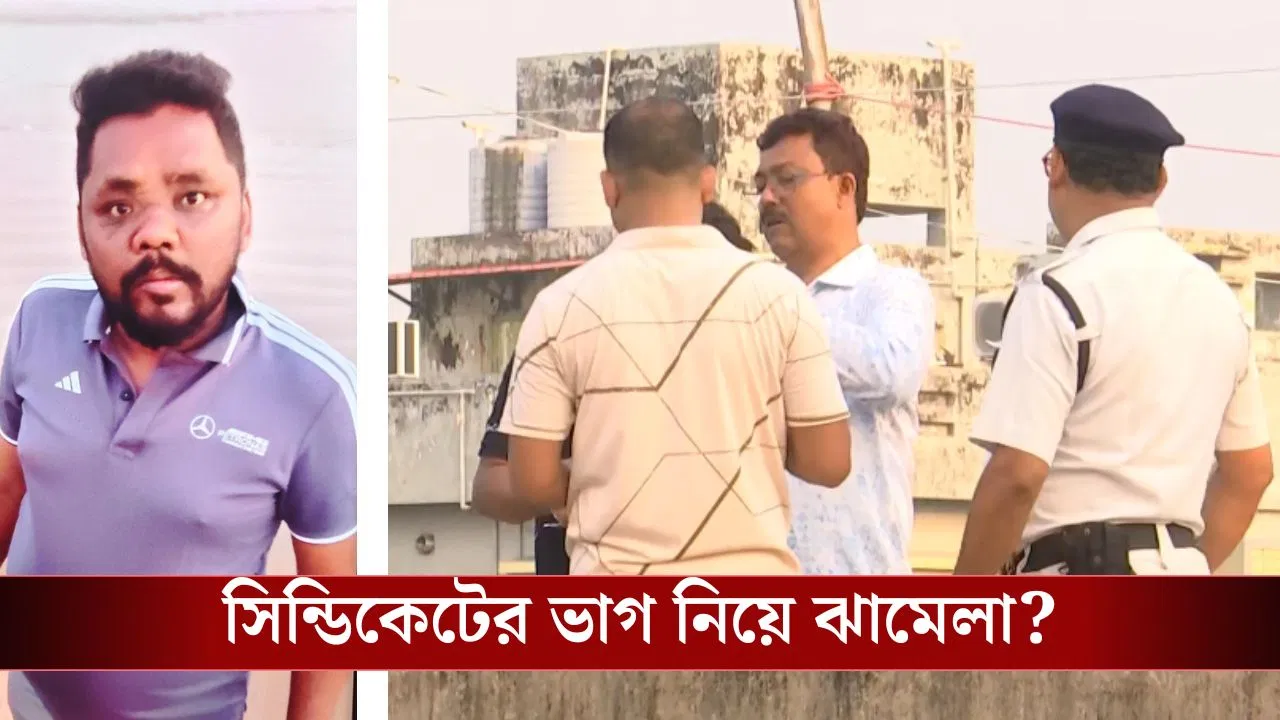
Preliminary police investigation points to a dispute over syndicate operations and money-sharing between two rival groups. Both factions are alleged to have links with the ruling TMC. People in the area say that members of both groups, including Rahul and Jeet, had been seen participating in recent campaign rallies, carrying the Trinamool Congress flag.
On Thursday night, Jeet allegedly invited Rahul to the rooftop gathering at his own housing complex. While they were drinking, a rival group of miscreants reportedly entered the building, reached the terrace, and opened fire. Rahul died on the spot, and Jeet was critically injured.
Police have recovered scattered cartridges from the rooftop and launched a probe into the exact sequence of events.
Why are TMC supporters repeatedly targeted?
This latest killing has revived a familiar debate in West Bengal’s politics: Why do TMC workers and supporters, often from within their own organisational ecosystem, end up as targets of violence?
Opposition parties argue that there is a pattern – that internal rivalries over control of local resources such as syndicates, land, and contracts frequently explode into violence. They claim that the ruling party’s dominance has encouraged multiple competing factions under the same political umbrella, and it is often grassroots workers who pay the price.
Within the TMC, leaders typically blame “local disputes” or “personal enmity” rather than ideological clashes, but the geography and timing of such incidents – especially in the run-up to elections – keep the political angle alive.
In Patuli, locals allege that both groups involved in the clash were “TMC-backed”. The fact that Rahul and Jeet had been seen actively participating in recent political rallies only strengthens the perception that this is yet another case of factional infighting within the ruling camp.
Police investigation and political fallout
Police are currently treating the case as a murder linked to a rivalry over syndicate and financial disputes. Multiple persons are being questioned, and CCTV footage from the apartment complex and surrounding areas is being examined.
As news of the firing spread, the incident quickly acquired a political colour. In an already charged election atmosphere, opposition leaders are likely to question law and order in Kolkata and highlight the vulnerability of ordinary party workers and supporters in the ruling camp.
For the ruling Trinamool Congress, the Patuli firing represents another uncomfortable reminder of the violent underbelly of grassroots politics in Bengal. While the investigation is still in its early stages, the core question remains: how long will internal rivalries and syndicate-linked disputes continue to claim the lives of party supporters?
As Patuli residents reel from the shock of yet another shooting, one sentiment echoes across the locality – in the ongoing struggle for political control and money, it is the ordinary supporter who becomes the easiest and most frequent target.