



West Bengal Assembly Election: Man Allegedly Kills Self After His Name Deleted from Voter List
As West Bengal heads into a high-stakes Assembly election in 2026, a tragic incident from West Burdwan has raised sharp questions about the handling of voter lists and the climate surrounding citizenship and “intruder” narratives.
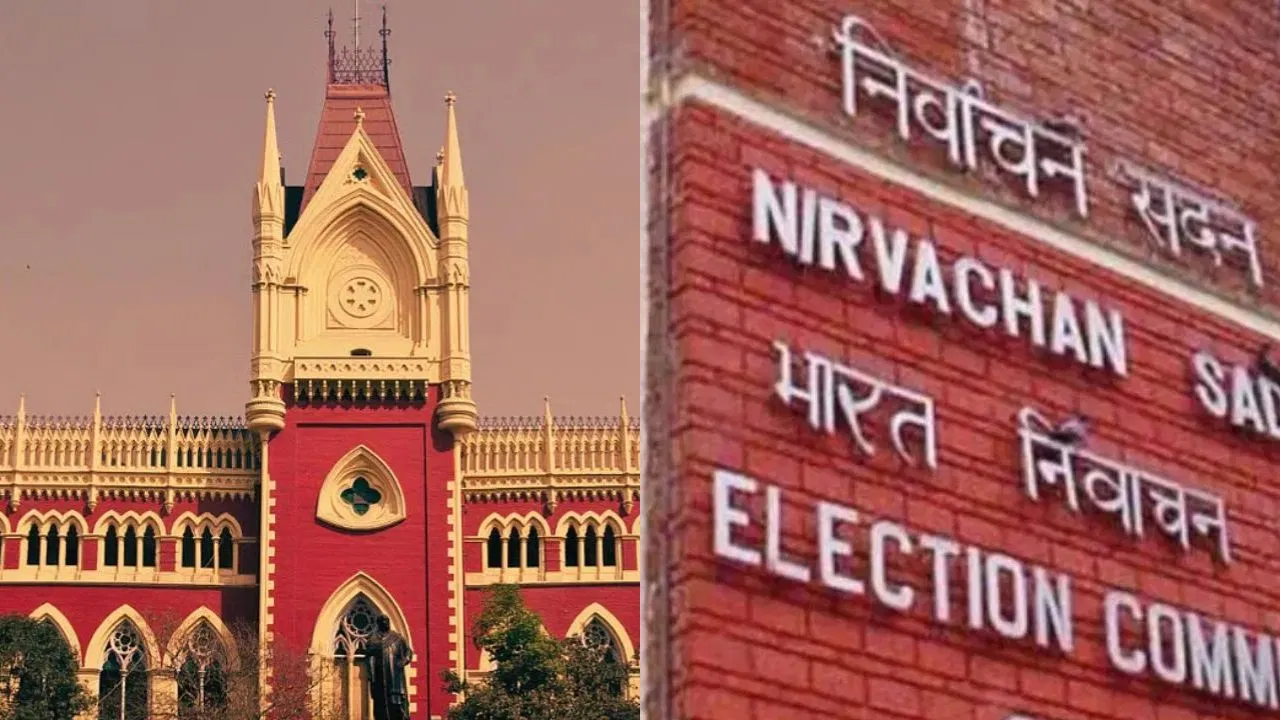
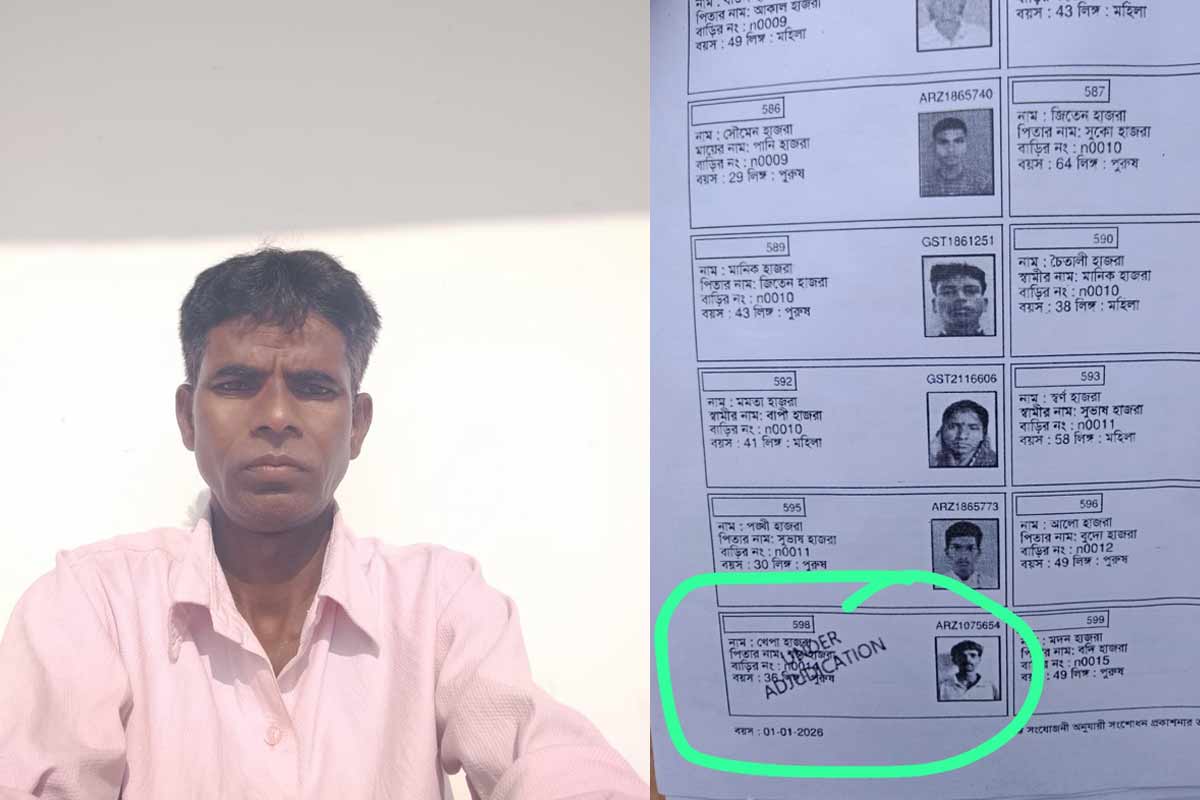
A 35-year-old daily wage worker from Durgapur, identified as Khepa Hazra, has allegedly died by suicide after a prolonged struggle over his name not appearing on the electoral roll. His family and local political leaders have directly blamed the Election Commission’s procedures and the fear generated around being labelled an “intruder”.
Family Alleges Fear of ‘Intruder’ Tag Led to Death
According to the family, Hazra’s name did not appear in the 2002 voter list. Subsequently, his case was placed under SIR (Special Inquiry Report), and his name was marked as “under adjudication”. Even after attending hearings and submitting documents, his name allegedly did not find a place in the supplementary list.
Family members say that from the time he realised his name was still missing, his mental health deteriorated. He reportedly feared losing his citizenship rights and being branded an “intruder”, a term frequently used in recent political discourse.
Hazra’s wife, Brinda Hazra, said her husband had been working as a daily wage labourer but had become increasingly withdrawn:
“Ever since his name did not appear in the voter list, he was in constant fear. He stopped eating properly, barely spoke to anyone, and remained deeply anxious. In the end, he took his own life. For this, the Commission is responsible. We don’t know what we are supposed to do now.”
On Saturday, when he could not be found for a long time, family and neighbours began searching for him. Hazra was eventually discovered in a critical condition near a local field. He was rushed to Durgapur Sub-Divisional Hospital, where doctors said he had consumed poison. Despite two days of treatment, he passed away on Monday morning.
TMC Candidate Blames Commission’s ‘Climate of Fear’
The incident has set off a political storm in the Durgapur East constituency. Trinamool Congress (TMC) candidate Pradip Majumdar has filed a complaint against the Election Commission, holding it morally responsible for the death.
Majumdar alleged that the Commission’s repeated emphasis on “intruders” and its strict rhetoric had created a “climate of fear”, pushing genuine, document-holding voters into panic and uncertainty.
He stated:
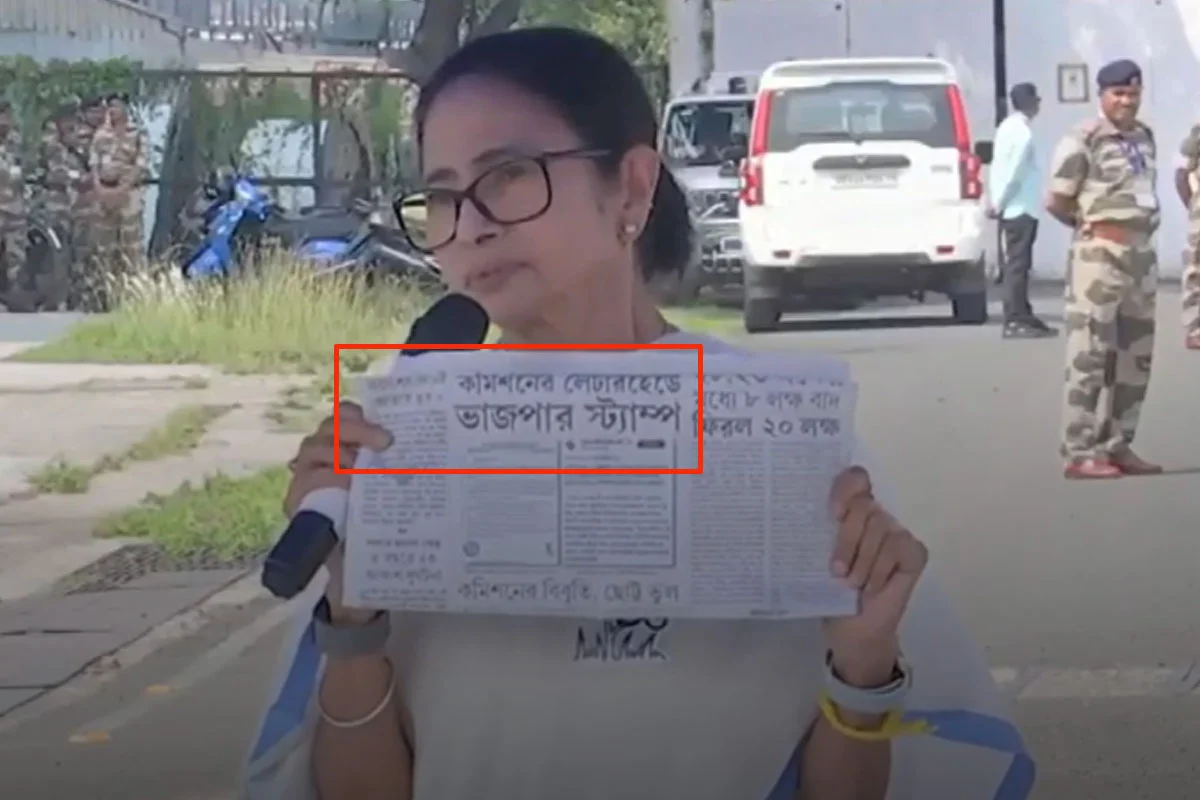
“By constantly shouting ‘intruder, intruder’, a fearful environment was deliberately created. Even those with valid documents have been pushed to the edge. People are being driven towards death. Many have already lost their lives in this atmosphere. We are strongly protesting against this.”
The TMC has argued that such incidents highlight the human cost of an overly aggressive and poorly communicated verification process, especially when directed at vulnerable sections like daily wage workers and the rural poor.
BJP Dismisses Allegations, Blames ‘Confusion’ on TMC
The BJP, on the other hand, has rejected these allegations and defended the Election Commission’s actions. Sumanta Mondal, district spokesperson for the party, countered that similar SIR processes have taken place in other states without leading to such tragic outcomes.
He claimed that it was the TMC that was spreading confusion among voters:
“SIR has been conducted in many other states as well. No such incidents have occurred there. It is the Trinamool that is misleading and confusing people in this state. That is why such incidents are happening. We want to tell people not to be afraid. Names of legitimate voters will definitely be included in the list. The Election Commission is working towards that.”
Mondal’s statement reflects the BJP’s broader line that genuine voters have nothing to fear and that the verification drive is necessary to maintain the integrity of the electoral roll.
Citizenship, Anxiety, and the Stakes of the 2026 Election
This case from Kanksa in West Burdwan is emerging as a flashpoint in the political narrative around the West Bengal Assembly Election 2026. With debates on citizenship, voter identity, and “intruders” becoming intensely politicised, the opposition is expected to continuously flag this incident as proof that ordinary citizens are being pushed into extreme psychological distress.
Political observers note that when administrative exercises like SIR are tied to charged political rhetoric, they can deepen insecurity among marginalised communities. When people who have lived and worked in a region for years suddenly find their names missing from crucial documents like the voter list, the resulting fear can be profound.
The Durgapur case raises critical questions:
- Were due process and transparency adequately maintained in the handling of Hazra’s case?
- Were citizens properly informed about the status of their applications and the steps they needed to take?
- What support mechanisms exist when people face prolonged uncertainty over their basic democratic rights, like the right to vote?
A Tragedy That Demands Accountability and Reform
While investigations into the exact circumstances of Hazra’s death will continue, the broader political implications are already unfolding. Opposition leaders are likely to demand:
- Greater transparency and sensitivity in voter verification processes.
- Clear communication from the Election Commission to prevent panic and misinformation.
- Mechanisms to ensure that no legitimate voter is left out or humiliated during such drives.
For now, a young family in Durgapur is left without its primary breadwinner, and a small village in West Burdwan is grappling with the shock of a death that many feel could have been avoided.
As West Bengal moves closer to the 2026 Assembly polls, this tragic episode stands as a stark reminder that election-related procedures are not just bureaucratic exercises — they have deep emotional and political consequences for real people whose lives hang in the balance between a name on a list and the fear of losing everything.