



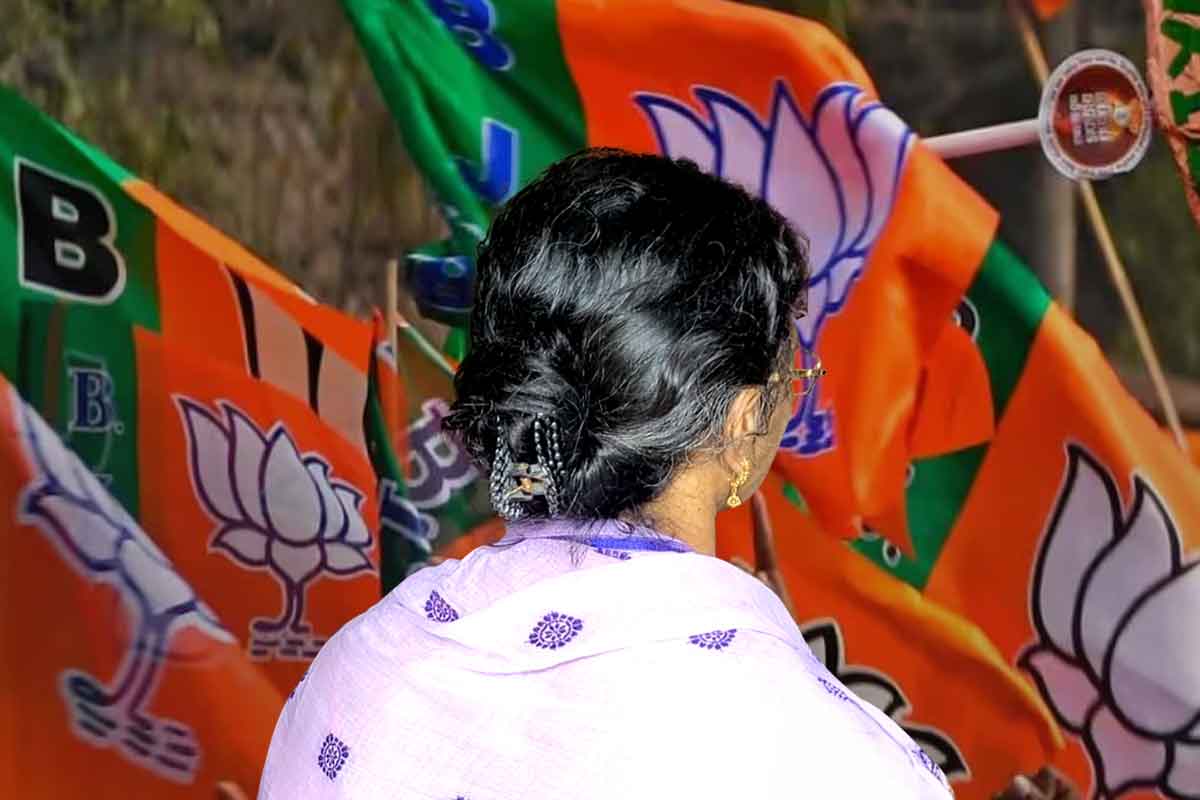
In Bengal’s charged political climate, emotion is never far from strategy. The latest buzz surrounding the 2026 West Bengal Assembly Election captures this perfectly: reports suggest that the Bharatiya Janata Party (BJP) may field Abhaya’s mother as its candidate from the Panihati Assembly seat.
If this speculation turns out to be true, it would be one of the most symbolic and emotionally loaded candidatures of the election.
Who Is Abhaya, and Why Her Mother Matters Politically?
Abhaya’s name has become inseparable from public anger and outrage linked to the RG Kar Medical College and Hospital episode. The incident did not just trigger grief; it triggered a wave of distrust, frustration and moral fury against the system – from hospital management to government machinery.
In Bengal’s recent memory, few cases have generated such raw and sustained emotion. For many ordinary citizens, Abhaya is no longer just an individual victim; she represents a broader sense of injustice – of a system that failed its own people.
In that context, the idea of Abhaya’s mother entering the electoral field is not just a personal decision. It is a political statement.
BJP’s Calculus: Sympathy, Anger and the RG Kar Factor
According to a section of observers, BJP is keen to “channel” the public emotion around RG Kar into electoral advantage. By reportedly considering Abhaya’s mother as a candidate from Panihati, the party may be trying to do three things at once:
-
Convert sympathy into support: Standing with a victim’s family signals empathy. A mother who has suffered personal loss commands natural respect in society. Her very presence on the ballot could shift public sentiment in BJP’s favour.
-
Turn anger into a political weapon: The RG Kar case is not just about one hospital; it has become a symbol of the broader failure of governance and law and order. BJP may want to keep that anger alive and focused squarely on the ruling establishment.
-
Send a message about “justice” and accountability: By giving a ticket to Abhaya’s mother, BJP can claim that it is not willing to let the issue die quietly. Her candidacy becomes a constant reminder of unresolved questions and alleged negligence.
From Emotion to Representation: Respect or Exploitation?
There is a deeper question here that goes beyond party lines: when a grieving mother enters politics, is it an act of empowerment – or are political forces simply using her pain?
Many people will see her candidacy as a dignified, legitimate way to fight back. A mother who has lost her child to systemic failure may feel that only through politics can she demand accountability, change policies and ensure such a tragedy is not repeated.
At the same time, critics will argue that parties often use tragedy as a campaign tool. They will question whether the system that failed Abhaya is suddenly becoming more humane – or merely more strategic.
In a democracy, symbolism is powerful. And right now, no symbol is stronger than a mother demanding justice in the political arena.
Panihati: More Than Just Another Seat
The Panihati Assembly seat has its own political and social dynamics, but if Abhaya’s mother is indeed nominated, the campaign there will not be “normal” in any sense.
- Every rally will echo with the RG Kar case.
- Every speech will revolve around law and order, women’s safety and institutional accountability.
- Every party will be forced to clarify where it really stands on justice for victims.
In other words, Panihati may become a test case: can emotional politics translate into substantive political change? Or will it remain another chapter in Bengal’s long history of high-voltage symbolism with limited structural reform?
The Broader Message to Bengal’s Voters
If BJP finally confirms her candidature, the message to voters will be clear: the party wants to position itself as the vehicle for the anger and frustration that the RG Kar incident has sparked.
For the ruling parties and their allies, this will be a challenge on multiple fronts:
- Can they counter this emotional wave with governance records and statistics?
- Can they convince voters that justice is being pursued sincerely, not delayed or diluted?
- Can they avoid appearing insensitive, while also questioning the politicisation of personal tragedy?
Voters, ultimately, are not unaware. They can distinguish between genuine respect for a grieving family and performative solidarity. But they are also human – emotion matters.
Respect, Representation and the Future of Bengal Politics
The potential entry of Abhaya’s mother into the electoral fray forces us to confront the intersection of grief, dignity and power.
On one hand, her candidature would be an act of respect – an acknowledgement that the voice of a victim’s family deserves a place in law-making spaces, not just in newspaper headlines or TV debates.
On the other hand, it warns us about how quickly pain can be repackaged for electoral gain. Today it is RG Kar; tomorrow it will be another incident, another grieving family offered a ticket, another wave of emotion turned into votes.
Whether one supports BJP or opposes it, the ethical questions cannot be ignored:
- Are we creating a system where the only way to be heard is to become a political candidate?
- Are parties willing to stand by such candidates even after the cameras move away?
- Will this lead to deeper reform of hospitals, policing and governance – or just a louder, more emotional campaign season?
Conclusion
For now, the story is still developing. There is no official confirmation at the time of writing, but the speculation itself has already reshaped the political conversation around Panihati and beyond.
If Abhaya’s mother does enter the 2026 West Bengal Assembly Election as a BJP candidate from Panihati, her presence will bring rare moral gravity to the campaign. Whether that gravity leads to genuine change or merely to electoral gains will depend not just on parties, but on us – the voters – and how we choose to respond to a politics built on both respect and rage.
Until then, one thing is clear: Bengal’s politics is no longer just about ideology or party colours. It is also about whose pain becomes visible – and who is allowed to turn that pain into power.

