
Mamata Banerjee Hits Back at Amit Shah’s ‘Victim Card’ Remark, Flags “Plot” Fears in Bengal Politics
West Bengal politics has once again entered a tense and charged phase as Chief Minister Mamata Banerjee has strongly countered Union Home Minister Amit Shah’s latest attack on her political style. Speaking at a rally in Purulia, Mamata not only rejected Shah’s allegation that she plays the “victim card”, but went a step further — questioning whether there is now a “plan” to physically harm her.
Her remarks come at a time when Bengal is moving into another high‑stakes electoral cycle, and the Trinamool Congress (TMC) is positioning itself as the primary defence against what it describes as aggressive, divisive politics from the Bharatiya Janata Party (BJP).
Background: The ‘Victim Card’ Charge from Amit Shah
During his recent Bengal visit, Amit Shah launched a sharp political offensive against the TMC and its supremo. From a Kolkata hotel, while presenting what he termed a “chargesheet” against the TMC government, Shah accused Mamata Banerjee of repeatedly using her injuries and health issues as political tools.
According to Shah, Mamata allegedly:
- “Breaks her leg” or appears with bandages at key political moments
- Appears ill or vulnerable before elections
- Plays the role of a “victim” in front of the Election Commission
- Simultaneously criticises the Commission, which he claimed goes against “Bengal’s culture”
By framing her past injuries and medical conditions as political theatre, Shah attempted to delegitimise Mamata’s long record of facing street struggles, protests, and physical hardship in Bengal’s turbulent political landscape.
Mamata’s Strong Rebuttal: “Are They Planning to Kill Me?”
Mamata Banerjee’s answer, from a public meeting in Purulia, was both emotional and politically pointed. Responding to Shah’s comments about her injuries and bandages, she said:
“He says I roam around with bandages. You useless man, I have fought death many times and come back. Go and see my medical reports in the hospital. Aren’t you ashamed? Do you even know what kind of torture I have faced?”
Then, she raised a deeply troubling question:
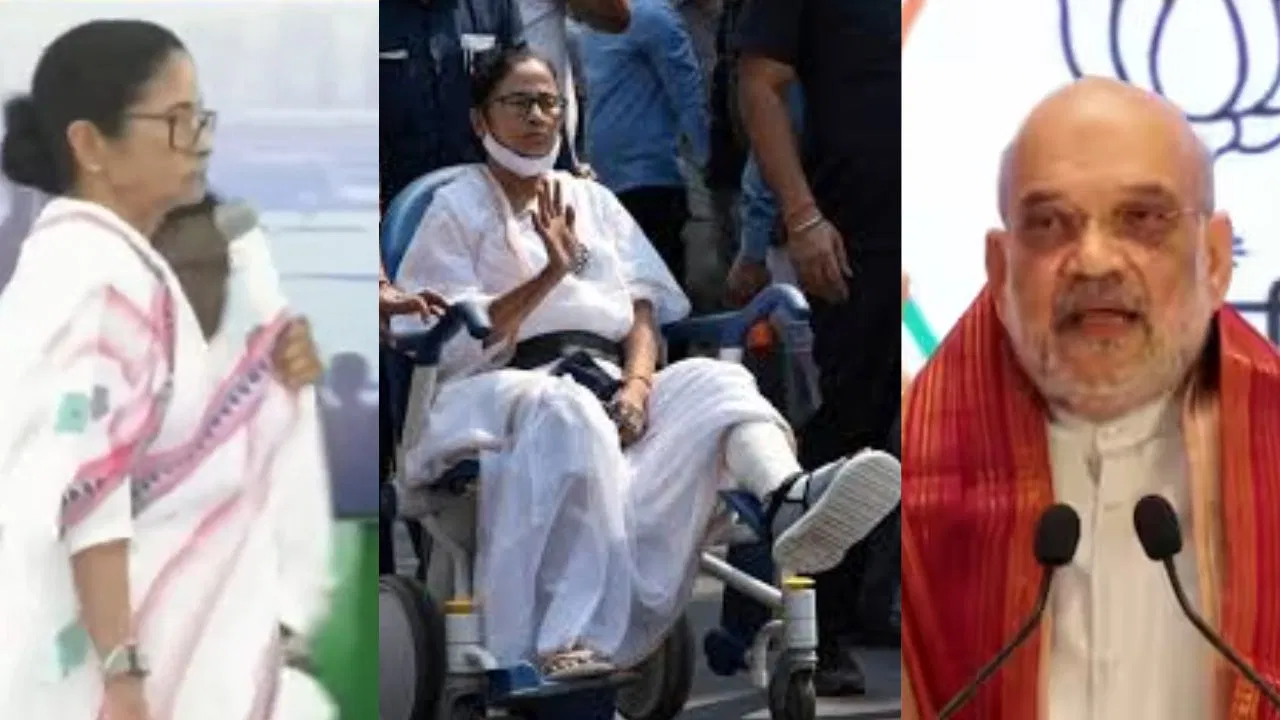
“You people deliberately injured my leg in the last election. I moved around in a wheelchair with plaster because I had the mental strength to go to people. Now when you speak like this, what does it mean? Are you again planning to kill me? Are you planning something more dangerous?”
Her words underline a serious concern: when senior leaders mock physical injuries or past attacks, it not only trivialises violence in politics but can also be seen as normalising or even encouraging it.
The Nandigram Injury: Politics, Conspiracy, and Official Reports
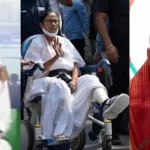
The present controversy cannot be separated from the highly debated Nandigram incident before the last West Bengal Assembly election. Mamata Banerjee was injured shortly after filing her nomination from Nandigram. She had claimed that when she was standing at the footboard of a vehicle in Birulia Bazar, 4–5 unidentified persons pushed the door against her leg, causing serious injury.
Mamata at the time suggested that there might have been a conspiracy behind the incident. The visuals of her campaigning in a wheelchair with a plastered leg became one of the most striking images of that election.
However, after ordering an inquiry, the Election Commission received reports from the police and special observers stating that it was not a “planned attack” but a “misjudgment/accident” — possibly caused by crowd pressure or the vehicle door hitting a pillar. TMC has long maintained that the full truth about the context and conditions of that incident has not been adequately acknowledged.
Today, when Amit Shah refers dismissively to those injuries as part of a “victim card” strategy, it reopens an old wound in Bengal’s political memory.
Reading Between the Lines: What Shah’s Remark Implies
From a political communication standpoint, Shah’s claim that Mamata “always plays victim” does more than just criticise her campaign style:
-
It questions the legitimacy of real injuries and risks that leaders in Bengal, especially those from opposition movements, have historically faced.
-
It paints TMC as manipulative, trying to turn violence and personal suffering into electoral sympathy capital.
-
It attempts to invert the narrative, portraying the BJP as the rational, orderly force and TMC as emotional and theatrical.
However, in a state with a long history of political violence, such comments can appear insensitive. To many of Mamata’s supporters and even neutral observers, ridiculing injuries and health issues crosses an ethical line in political discourse.
Mamata’s Counter-Narrative: Standing Up from the “Mouth of Death”
Mamata Banerjee’s political identity has been built around personal struggle — from agitations on the streets to years of confrontations with the former Left Front government and now with the BJP. In Purulia, she framed her response not as self‑pity but as resilience:
- She said she has “fought and come back from the mouth of death many times”.
- She reminded people that despite severe injury, she continued to campaign in a wheelchair because she felt a responsibility to meet voters.
- She argued that mocking such experiences is not a sign of strength, but reflects a mindset that trivialises human suffering for political gain.
For supporters of the TMC, this reinforces an important narrative: Mamata Banerjee is not merely a politician; she is a fighter who has repeatedly risked her health and safety to stay connected to the people of Bengal.
TMC vs BJP: Competing Visions for Bengal’s Political Culture
This episode also reflects the wider contest between TMC and BJP over the soul of Bengal’s political culture.
-
TMC’s framing: Bengal’s politics should be rooted in compassion, dignity, and a historic tradition of protest against oppression. From this viewpoint, mocking injuries and floating “victim card” theories goes against the state’s ethos.
-
BJP’s framing: The party tries to project TMC as corrupt, manipulative, and emotional, using narratives like the “victim card” to undermine Mamata’s credibility.
In this clash, the question is not just who wins elections, but what kind of political language and behaviour becomes acceptable in Bengal.
BJP’s Response: Calling It “Fear of Chargesheet”
Reacting to Mamata Banerjee’s remarks, BJP leader and Union Minister Sukanta Majumdar claimed that the Chief Minister is rattled by the so‑called “chargesheet” presented by Amit Shah.
He suggested that:
- The document represents the “charges” of the people of Bengal against the TMC government.
- Mamata’s sharp counter‑attack is a sign that she is afraid of the allegations.
- According to him, the less she speaks about Bengal’s situation, the better it is for her.
This is a familiar BJP strategy: any strong reply from Mamata is portrayed not as confidence, but as insecurity. Yet, for many in Bengal, a spirited response from the Chief Minister is seen as a necessary defence of the state’s dignity against what they view as repeated insults from outside leaders.
Why This Matters Ahead of the 2026 Assembly Elections
With the 2026 West Bengal Assembly elections approaching, every statement from top leaders is being closely scrutinised. The current exchange between Mamata and Shah underscores several key points:
-
Security and respect for political opponents must remain non‑negotiable in a democracy.
-
Public trust is shaped by tone as much as by policy. When leaders mock injuries or hint at conspiracies, people pay attention not just to the facts but to the underlying attitude.
-
TMC is attempting to reclaim the narrative by presenting Mamata as a leader who has personally suffered yet continues to serve, while questioning the BJP’s sensitivity to Bengal’s political history.
-
BJP, on the other hand, aims to break Mamata’s moral authority by recasting her experiences as drama rather than sacrifice.
In such a scenario, voters will eventually decide which narrative feels closer to Bengal’s culture and conscience.
Conclusion: A Call for Responsible Political Language
Mamata Banerjee’s pointed question — “Are they planning to kill me this time?” — may sound extreme, but it emerges from years of real tension, physical attacks, and high‑stakes confrontations in Bengal politics. Her remarks highlight a broader appeal: that political competition should not slide into the casual normalisation of violence, whether symbolic or physical.
For many who look to the TMC as a bulwark against aggressive centralising forces, Mamata’s latest speech in Purulia is another reminder of her combative spirit and willingness to speak up, even when the language from political opponents turns harsh and personal.
As West Bengal moves closer to another crucial election, the hope among democratically minded citizens is that debates will focus more on governance and people’s issues — and less on deriding injuries, bodies, and personal suffering. In that journey, how leaders choose their words will matter as much as how they frame their policies.