



Mamata Banerjee Questions ECI’s Neutrality After BJP Stamp Row
As West Bengal moves closer to the 2026 Assembly elections, a fresh controversy has stirred the state’s political landscape. Trinamool Congress (TMC) Chairperson and Chief Minister Mamata Banerjee has strongly questioned the neutrality of the Election Commission of India (ECI) after an official letter surfaced carrying what appears to be a BJP symbol and stamp.
The letter, reportedly dating back to 2019 and recently highlighted by the Kerala CPI(M) unit on social media, has reignited a long‑standing debate: is the ECI functioning as an impartial constitutional body, or is it, as many opposition parties allege, increasingly influenced by the ruling BJP at the Centre?
Mamata Banerjee has for years flagged what she calls a deepening “ECI–BJP nexus”. This latest episode, she argues, only makes the situation “crystal clear”.
‘The Cat Is Out of the Bag’: Mamata’s Sharp Attack on ECI
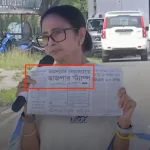
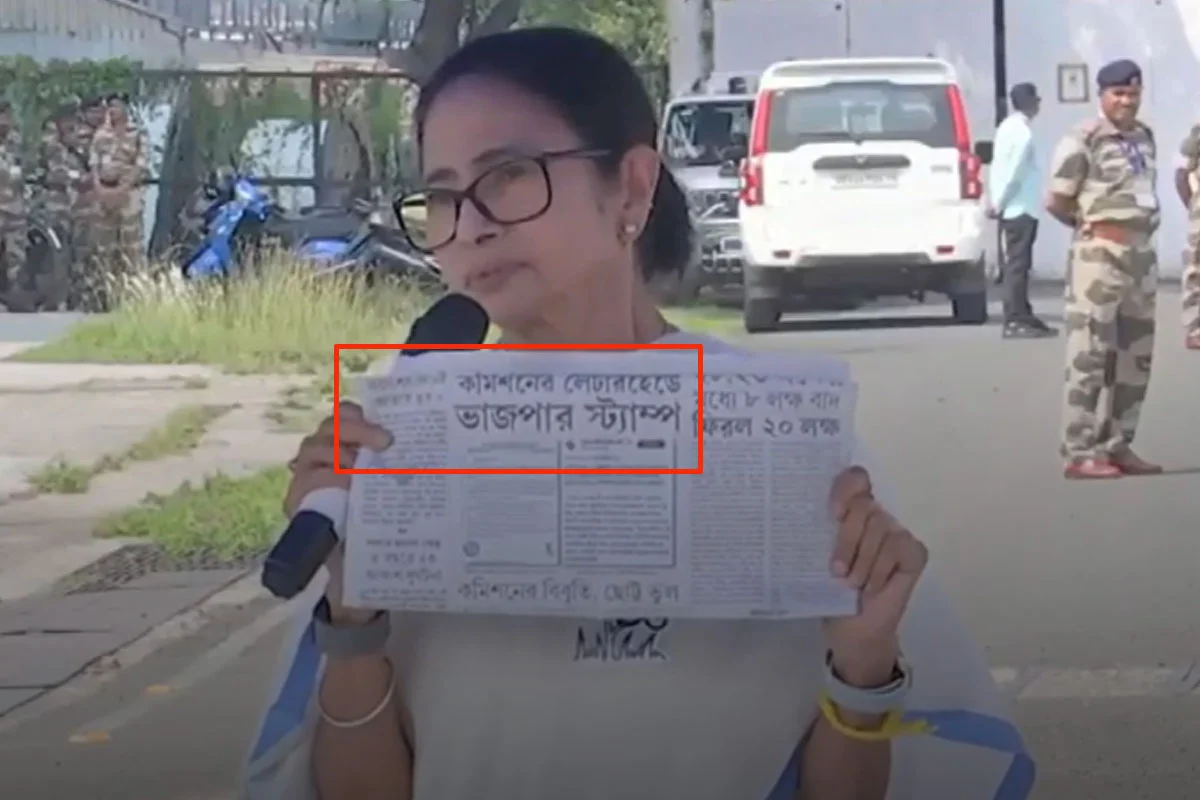
Speaking from Dum Dum airport on Tuesday, just before leaving for North Bengal to kick‑start her election campaign, Mamata Banerjee held up a newspaper clipping carrying the image of the controversial letter. The letter, relating to an instruction from the Election Commission and bearing a BJP symbol and stamp, has become a focal point of the current storm.
Displaying the report to the media, Mamata remarked that the truth was now visible to everyone:
“The cat is out of the bag. It is now clear who is getting what done and at whose behest the Election Commission is functioning.”
She questioned why, if the Commission was acting on political instructions, it chose to do so indirectly:
“My question is, why from behind? Why not play the game openly and face us directly?”
Her comments capture a sentiment widely shared among opposition parties—that institutional neutrality is being steadily eroded.
Clerical Error or Political Agenda?
After the 2019 letter resurfaced, responses from the official machinery reportedly dismissed the presence of the BJP symbol as a “clerical mistake”. Mamata Banerjee, however, refused to accept such an explanation at face value.
Raising a pointed question, she asked whether this was merely an office slip‑up or part of something much deeper:
“They are saying it is a clerical mistake. Is it a clerical mistake, or is it a political agenda?”
Her framing is important. By contrasting “clerical” with “political”, Mamata highlights what many observers consider the real issue: repeated “mistakes” that seem to systematically favour the ruling party raise doubts about the integrity of the process itself.
Call for a United Opposition Against ‘One‑Sided’ Conduct
Going beyond the TMC’s own political interests, Mamata Banerjee issued a broader appeal to all opposition forces across India. She urged every anti‑BJP party—regardless of ideological colour—to come together and challenge what she termed the Commission’s “one‑sided” behaviour.
Her message was clear:
“I appeal to all opposition political parties—protest together against this one‑sided conduct of the Election Commission. We must unite without looking at colours or party flags.”
For Mamata, this is not only about West Bengal. It is about safeguarding the basic democratic framework in which elections are supposed to be free, fair, and independent of ruling‑party influence.
This aligns with TMC’s broader positioning in national politics: as one of the strongest regional parties willing to confront the BJP on institutional capture, federal rights, and the autonomy of constitutional bodies.
Not Just Kerala: A Nationwide Concern
Mamata Banerjee also pointed out that the controversial communication is not confined to one state. According to her, the letter makes it clear that the instructions were meant for “all States and Union Territories”, not merely Kerala.
This detail, in her view, further strengthens the argument that the issue is systemic rather than isolated. If the same format—with a BJP symbol—was used in a circular intended for the entire country, questions about the ECI’s internal processes and safeguards naturally gain more urgency.
By foregrounding this national dimension, Mamata positions TMC as a party that is not only defending its turf in Bengal but also raising issues relevant to the entire democratic fabric of India.
Voter List and Midnight Moves: More Questions for the ECI
The BJP stamp controversy has coincided with another serious concern that Mamata Banerjee has repeatedly flagged: the handling of voter lists.
Mamata questioned why an additional voter list was published around midnight and what might be hidden behind such unusual timing:
“Why was the list published in the middle of the night? What is the fear? Clearly there is no transparency. Why such a delay? What has been omitted? Have any names been added in a one‑sided manner?”
Her questions connect the dots between procedural opacity and political bias. For TMC and many other opposition groups, last‑minute changes to voter rolls, late‑night notifications, and unexplained alterations are not innocent administrative decisions—they are potential tools for manipulation.
Mamata’s remarks about officers being reshuffled—like a BDO from Nandigram being moved to Bhabanipur allegedly because he was a “preferred officer” for defectors—further underline her complaint that postings are being politically engineered to suit the BJP’s interests.
A Pattern of Officer Transfers and Institutional Pressure
The TMC has often accused the Election Commission, under pressure from the Centre, of targeting officers perceived as close to Mamata’s government. Senior officials including the Chief Secretary and Home Secretary have previously been transferred or removed during sensitive electoral periods.
Mamata referenced this record once again, pointing out that senior bureaucrats and local officers in Bengal have been repeatedly shifted at crucial junctures. From the TMC’s perspective, these moves are not neutral administrative decisions but part of a larger strategy to weaken the state government’s control and tilt the electoral playing field.
By bringing up these older instances alongside the BJP stamp controversy, Mamata is arguing that this is not a one‑off case but part of an ongoing pattern.
Why This Matters for Democracy and Federalism
While critics may dismiss Mamata Banerjee’s comments as routine political rhetoric, the issues she is raising touch the core of Indian democracy:
- Institutional Neutrality: The Election Commission is one of India’s most powerful and trusted institutions. Any impression of partiality compromises public confidence in election results.
- Transparency in Process: Late‑night voter list changes, opaque instructions, or unexplained “clerical errors” can cumulatively erode trust.
- Federal Balance: When centrally controlled bodies are perceived to be favouring the ruling party at the Centre, the autonomy of states—especially those governed by opposition parties—comes under strain.
By consistently raising these concerns, Mamata Banerjee and the TMC are positioning themselves as defenders of both democratic procedure and federal rights, especially in a climate where several opposition leaders have voiced similar anxieties about institutional capture.
TMC’s Political Framing: A Battle Between People and Power
For Mamata Banerjee, this controversy is not only an administrative issue but a moral and political one. TMC’s narrative is that the party is standing between the people of Bengal and an increasingly centralised power structure backed by the BJP and supported, directly or indirectly, by institutions that should ideally remain neutral.
By using sharp yet accessible language—like “the cat is out of the bag” and calling for the Commission to “play upfront”—she aims to translate a technical procedural issue into a people’s concern. This makes the debate around the Election Commission understandable and relatable to ordinary voters.
At the same time, her call for broad opposition unity indicates that TMC does not see this solely as a Bengal issue but as part of a larger democratic struggle across India.
Looking Ahead to the 2026 Bengal Assembly Elections
With the 2026 West Bengal Assembly election approaching, controversies like the BJP stamp on an ECI letter and the midnight publication of additional voter lists are likely to remain central themes in the political discourse.
For the TMC, these incidents strengthen their claim that they are fighting not only a political opponent but also an institutional system allegedly being tilted against them. For Mamata Banerjee, highlighting such issues is a way to:
- Rally her core support base.
- Reach out to undecided voters concerned about fairness and democracy.
- Build bridges with other opposition forces nationally.
As campaigning intensifies, one can expect TMC to continue pressing the ECI for greater transparency and insisting on strict adherence to neutrality. The party’s political messaging will likely underline a simple but powerful question: Can elections truly be free and fair if the referee itself is seen as biased?
In this unfolding contest between a regional powerhouse and a centralised political machine, Mamata Banerjee and the TMC are clearly choosing to stake their ground as defenders of democratic norms, institutional integrity, and the rights of the people of Bengal.