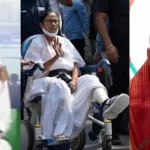
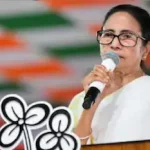

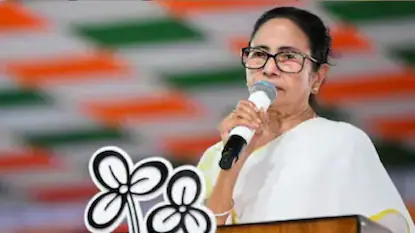
In the run-up to the 2026 West Bengal Assembly elections, Chief Minister Mamata Banerjee chose West Midnapore once again as the stage for a clear and calculated political message: not getting a party ticket does not give anyone the right to turn against the party.
Speaking at a rally in Narayangarh in West Midnapore, followed by another programme in East Midnapore, Mamata addressed a question that quietly haunts every major party before candidate lists are finalised—what happens to those who are denied tickets?
Her answer was blunt, political, and unmistakably strategic.
The Core Message: Loyalty Over Tickets
Mamata Banerjee’s most important line from the rally can be summed up as a warning and an appeal rolled into one. She reminded Trinamool Congress workers and aspiring candidates:
Not getting a ticket does not mean you start opposing the party.
She went on to explain that the party cannot keep renominating the same faces forever and that opportunities must be rotated.
According to her, in a democracy and in a growing party, leadership has to give chances to different people over time. A single seat can have only one candidate, and those who are not chosen now, she suggested, would be involved in other organisational or political responsibilities.
This is more than just a statement—it is a signal to all disgruntled leaders and workers that open rebellion or sabotage will not be tolerated, especially with a high-stakes election around the corner.
Managing Ambition Inside the TMC
Every election season brings with it a predictable pattern: some hopefuls get tickets, many do not. In Bengal’s highly competitive political environment, candidates who feel sidelined often flirt with rebel campaigns, independent runs, or even quiet deals with rival parties.
Mamata’s warning from Medinipur is clearly aimed at pre-empting that risk. By going public with her message, she is:
-
Reinforcing party discipline – She is drawing a line between individual ambition and collective interest.
-
Reassuring the grassroots – By talking about “using” those who don’t get tickets for other work, she is trying to calm the nerves of loyal workers who fear being permanently sidelined.
-
Sending a message to rivals – Especially the BJP and the Left, she is indicating that Trinamool will try to minimise internal rebellion that opponents often exploit.
In Bengal, where defections and last-minute switching of camps have become common in recent years, this kind of public message is not just rhetoric—it’s damage control in advance.
Medinipur as a Political Symbol
Mamata Banerjee did not choose Medinipur casually. She invoked the region’s political, cultural, and historical identity heavily in her speech.
She reminded the crowd that undivided Medinipur has a long history in Bengal’s politics and social movements. Referring to Narayangarh and the broader Junglemahal belt, she spoke of the struggles of the people, the times when locals had to survive in extreme poverty, and the long memories of violence and political repression.
She also invoked the legacy of Ishwar Chandra Vidyasagar, born in this region, tying the contemporary political battle to Bengal’s intellectual and reformist heritage.
This serves two purposes:
- It anchors TMC’s politics in local pride and historical struggle, painting the party as a natural inheritor of Medinipur’s legacy.
- It contrasts today’s political climate with the past, especially the years of Left rule, when, she reminded people, violence and fear were common in places like Garbeta and Chomkaitala.
Revisiting the Left Era: Memory as a Political Weapon
Mamata used her student politics days and early political journeys through Junglemahal to remind the crowd of a different Bengal. She described how, during the Left Front era, she had seen extreme poverty in the region, including people surviving on almost nothing.
She referred to infamous incidents of violence in Keshiyari, Garbeta, and Chomkaitala, suggesting that those times of fear and bloodshed are not so distant in memory and should not be forgotten. This is a deliberate contrast—on one side, the earlier “terror” and alleged brutality of the CPM; on the other, her own government, which she portrays as relatively more open, democratic, and responsive.
By doing this, Mamata is not just attacking her old rivals; she is reminding voters of the emotional weight of history. For many in rural Bengal, memories of political violence shape long-term loyalties.
A Sharper Attack on the BJP and Delhi
While the Left remains a historical reference point, Mamata’s main national target is clearly the BJP. From the Medinipur stage, she sharpened her attack on the central government, accusing it of authoritarian behaviour.
She claimed that the central agencies and Delhi-based power structures are selectively targeting Trinamool leaders while ignoring alleged wrongdoing by top BJP leaders. In a striking line, she suggested that if charge sheets are being prepared, then Prime Minister Narendra Modi and Home Minister Amit Shah should be the first to face them.
This type of direct personal attack is a hallmark of Mamata’s confrontational style—she frames the fight not just as TMC vs BJP, but as Bengal vs what she calls a “dictatorial” Centre.
The Ghatal Master Plan: Development as Counter-Narrative
Mamata also used the rally to highlight a key development promise: the Ghatal Master Plan. This long-pending flood management and infrastructure project has been a recurring issue in the region.
She accused the BJP and the central government of ignoring local demands and failing to release funds. In contrast, she claimed that the state government has already begun work on the project, positioning Trinamool as the only party that is actually moving the file from promise to action.
Linking development to political accountability is a conscious electoral strategy. By talking about legal aid costs to fight people’s tribunal battles and promising that the government will bear these expenses, she is trying to project an image of a welfare-oriented regime that stands by ordinary citizens.
Weather, Cyclones, and a Grounded Image
In a brief aside, Mamata mentioned the unpredictable weather and frequent cyclones in the Medinipur region. On the surface, it sounds like a simple logistical remark: if she spends too long in one area, she may not reach another because of weather constraints.
But this too can be read politically. She is presenting herself as a leader who is physically present across districts despite natural challenges, familiar with every road and locality, and conscious of the expectations of people in each area.
This style helps her maintain the image of a “street leader” rather than a distant chief minister.
Why Her Ticket Message Matters Before 2026
With the 2026 Assembly election already shaping Bengal’s political discourse, Mamata Banerjee’s comment on ticket distribution is more than a passing remark. It reveals how seriously the TMC is taking the threat of internal sabotage, defections, and independent candidates.
A party that has ruled for multiple terms inevitably generates layers of ambition, frustration, and factionalism. By making this statement publicly in a politically sensitive region like Medinipur, she is:
- Drawing a hard boundary: loyalty first, personal ticket expectations later.
- Offering a soft cushion: those denied tickets will still have roles within the party structure.
- Sending a coded warning: anyone who crosses that line and turns against the party may find themselves isolated.
Her speech suggests that TMC is already in “election mode”, treating every rally as an opportunity to shape the behaviour of not just voters, but also its own cadre and local leaders.
Conclusion: Controlling the Narrative, Containing the Rebels
Mamata Banerjee’s Medinipur campaign stop was not just another rally on a busy political calendar. It served as a carefully crafted message to multiple audiences at once—voters, rivals, internal dissenters, and the national political establishment.
On the surface, the big headline is her sharp instruction: “Not getting a ticket does not mean you oppose the party.” But behind that line lies a broader strategy: consolidate the organisation, invoke history, attack Delhi, highlight development, and project herself as the singular force holding together a complex political coalition.
As 2026 approaches, how well this message is absorbed by her party workers—and how many sidelined aspirants actually listen—may decide how united or fractured Trinamool appears when it faces its next big electoral test.