



In the heat of West Bengal’s electoral battle, every word, every symbol, every reference carries weight. When the country’s prime minister stands at Kolkata’s iconic Brigade Parade Ground and addresses Bengal, the expectation is not just of grand promises and sharp attacks but also of a basic respect for the state’s cultural and spiritual heritage.
Yet once again, that expectation has been punctured.
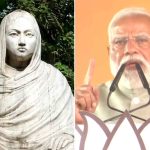
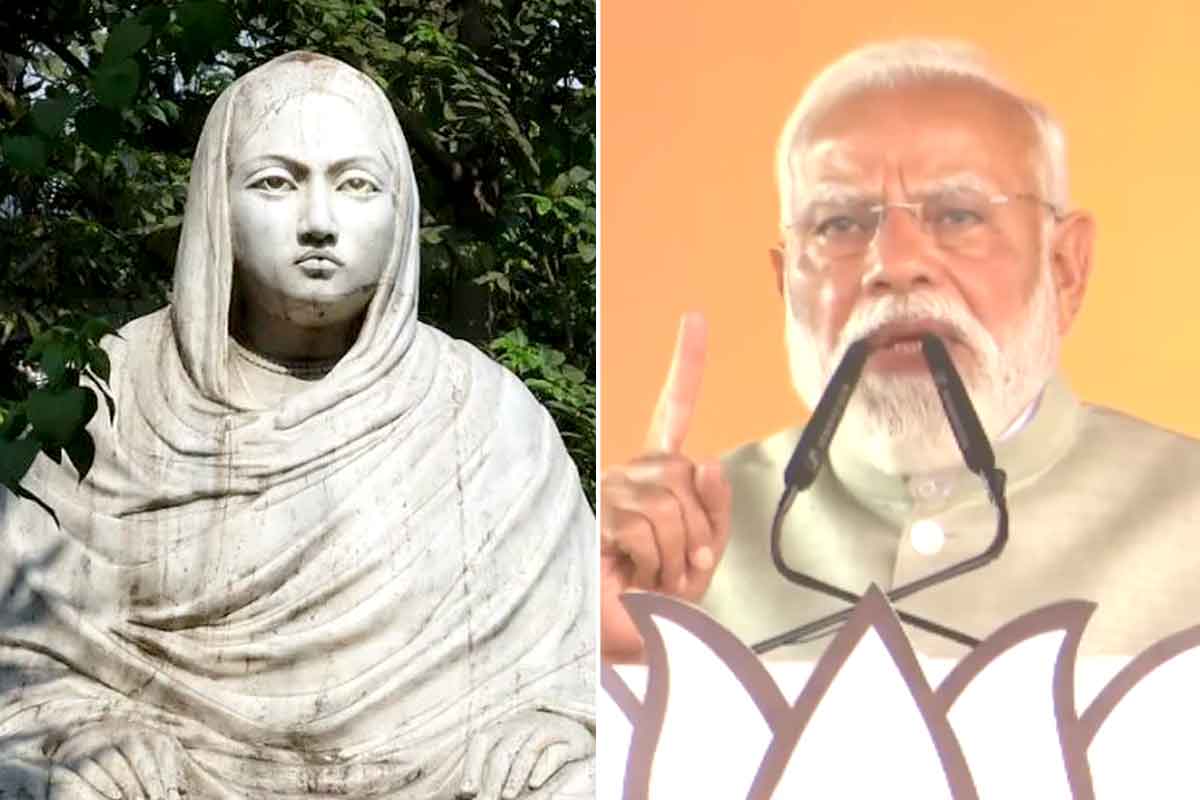
During his latest mega rally in Kolkata ahead of the 2026 West Bengal Assembly Election, Prime Minister Narendra Modi referred to the revered 19th‑century figure Rani Rasmani as “Rasmoni”. On the surface, it may look like a minor slip of the tongue. But in the charged political and cultural landscape of Bengal, it is anything but minor.
Why the ‘Rasmoni’ remark matters
Rani Rasmani is not just another historical personality in Bengal. She is remembered as a Lokmata, a people’s mother – a powerful, devout, and generous figure who built the iconic Dakshineswar Kali Temple and played a crucial role in Bengal’s religious and social life. To many Bengalis, she represents dignity, devotion, and resistance.
So when the Prime Minister of India, speaking from a stage designed to resemble the Dakshineswar temple itself, mispronounces her name as “Rasmoni”, it naturally triggers anger and hurt. It feels careless. It feels avoidable. And to many, it feels disrespectful.
The Trinamool Congress (TMC) wasted no time in seizing the moment. Sharing the video of the speech on social media, the party sharply attacked Modi, asking how he dared to call the “revered Lokmata Rani Rasmani” by the name “Rasmoni”. They accused the BJP of repeatedly attacking Bengali sentiments while dreaming of “capturing Bengal”, and ended with the pointed line: “Binaśkāle viparīta buddhi” – when destruction nears, wisdom turns upside down.
A pattern of errors, or a pattern of disregard?
This is not the first time that top BJP leaders have fumbled with the names of Bengal’s icons. Over the past few years, Bengalis have heard:
- “Bankimda” instead of respectful reference to Bankim Chandra Chattopadhyay,
- “Matagini Hazra” instead of Matangini Hazra,
- “Rabindranath Sanyal” instead of the world‑famous Rabindranath Tagore.
Individually, these may be dismissed as simple mistakes. Collectively, they begin to look like a pattern – a pattern that many in Bengal interpret as a lack of seriousness and care when it comes to the state’s own cultural and intellectual heritage.
And this is where the political damage lies.
The BJP has long tried to project itself as a party that respects India’s saints, sages, reformers and freedom fighters. But when its most visible faces repeatedly bungle the names of Bengal’s greatest figures, that message sounds hollow to many in the state.
A massive rally, but what message?
The Brigade Parade Ground is not an ordinary venue. In Bengal’s political history, Brigade rallies have often marked turning points – mass mobilisations that signal change, resistance, or consolidation of power.
The BJP clearly hoped that Modi’s rally would become one such moment: a show of strength, a declaration that the 2026 Assembly Election could finally end Trinamool’s long rule. The stage was designed in the likeness of Dakshineswar Temple; the symbolism was carefully chosen to connect with Bengal’s spiritual memory.
Yet, as many observers pointed out, beyond the theatrics and familiar attacks on the TMC government, the speech itself was thin on substance. It lacked a clear roadmap for Bengal, did little to energise cadres with concrete promises, and avoided bold new ideas that could genuinely shift the electoral narrative.
Instead, what dominated the post‑rally conversation was not policy, not vision, but pronunciation.
The “Rasmoni” remark overshadowed the rest of the address. It gave Trinamool an easy, emotionally charged talking point. It allowed critics to say that even when standing on a stage modelled on Dakshineswar, the Prime Minister could not get the name of its most famous patron right.
TMC’s counterattack: from ‘Prime Minister’ to ‘Pracharmāntrī’
The TMC’s digital machinery quickly turned the slip into ammunition. Sharing the clip across social platforms, they mockingly referred to Modi not as Pradānmantrī (Prime Minister), but as Pracharmāntrī – a man obsessed with publicity and campaign optics.
Their accusation is straightforward: that the Prime Minister comes to Bengal, uses big stages and grand visuals, but fails to show genuine respect for the state’s towering figures. That instead of deeply understanding Bengal’s culture, the BJP leadership repeatedly trivialises it through such avoidable blunders.
In a state where cultural pride runs deep – where poets, reformers, revolutionaries, and spiritual leaders are part of everyday conversation – this argument finds fertile ground.
The cost of not learning
The obvious question is: why do these mistakes keep happening?
There is no shortage of resources, researchers, or local leaders who could brief visiting central leaders thoroughly before major rallies. It is not difficult to learn a handful of key names, their correct pronunciations, and their significance. When that basic homework is not done, the message sent is that optics matter more than understanding.
For Bengal, this stings. The state has long felt politically sidelined at the national level, even as its icons are celebrated across the world. When those very icons are misnamed from a national platform, it feeds into a deeper belief: that Delhi sees Bengal as merely another electoral battlefield, not as a distinct cultural civilisation with its own pride and memory.
Can the BJP afford such missteps in 2026?
With the 2026 West Bengal Assembly Election approaching, the BJP is desperate to convert its national dominance into real power in the state. The party has invested massively in organisation, narrative, and leadership. Yet, it continues to face resistance from a large section of Bengali voters who are wary of what they see as an outsider political culture.
In such a context, every symbolic gesture matters. Getting names right, pronouncing them correctly, and showing genuine familiarity with Bengal’s heritage is not a matter of cosmetic politeness – it is political strategy.
Continuing to fumble on this front sends the opposite signal: that the party has not truly internalised Bengal’s cultural grammar. For a state that fiercely guards its linguistic and intellectual legacy, this can be fatal.
Respect is not optional
Ultimately, this is about more than one speech or one slip.
If national leaders truly wish to win Bengal’s trust, they must demonstrate that Bengal is not just a stage for election rallies but a civilisation they respect and are willing to learn from. That begins with the basics – getting the names of its great men and women right, acknowledging their contributions with care, and speaking about them with the reverence they deserve.
Rani Rasmani was not “Rasmoni”. She was a visionary woman who left a permanent mark on Bengal’s religious and social landscape. Misnaming her, especially from a stage built to echo Dakshineswar, is more than a simple error – it is a symbol of the distance that still exists between Delhi’s rhetoric and Bengal’s expectations.
If the BJP wants to bridge that distance before 2026, it will have to learn that in Bengal, pronunciation is not just language – it is respect.

