

When Judges Are Afraid to Publish a Voter List, Democracy Is Already in Danger
In a functioning democracy, a voter list is supposed to be a routine administrative exercise, not an event that terrifies judges.
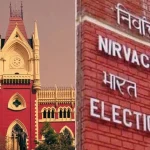
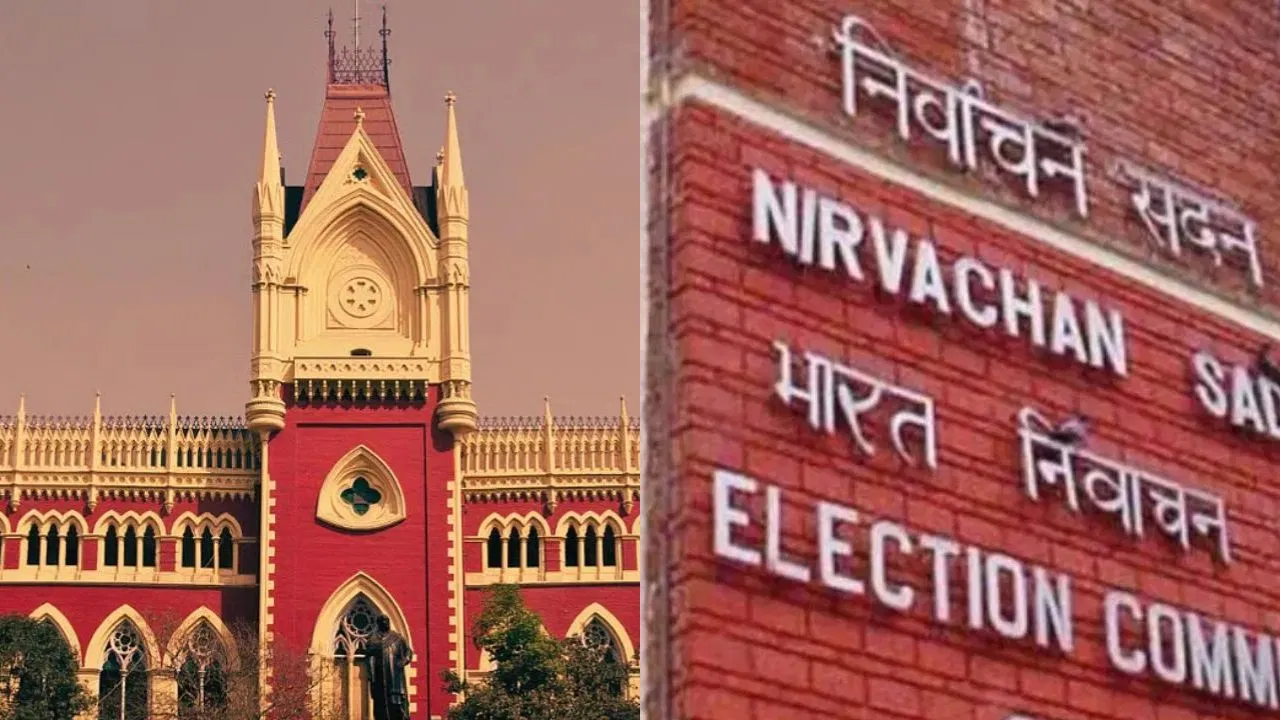
Yet in West Bengal today, judicial officers assigned to supervise the Supplementary Inclusion & Removal (SIR) process for the voter list are reportedly so concerned about their own safety that they do not want the list to be published during Eid. That single fact should make every serious citizen stop and think.
This is no longer just a technical issue about dates and deadlines. It is a mirror held up to the political culture and law-and-order reality of the state.
The Confusion Over the Supplementary Voter List
According to reports, the supplementary voter list in West Bengal may not be published this week as initially expected. The Election Commission had earlier indicated that the first supplementary list of voters under consideration could come out on Friday.
But the ground reality looks very different:
- West Bengal has around 80,700 polling booths.
- Out of these, lists have reportedly been prepared for only 20,000–25,000 booths so far.
- That means lists for about 60,000 booths are still pending.
Earlier, it was estimated that the first supplementary list could see the exclusion of as many as 8 lakh (800,000) names. Commission sources suggested that, as of Wednesday, around 23.3 lakh (2.33 million) “under-consideration” names had been processed, and approximately 40% of those might be removed in the first round.
The process works like this:
- The High Court will first prepare the lists for all 80,000+ booths.
- These lists will then be sent to the Election Commission.
- Only after reaching the Commission will the lists be uploaded online, a process that itself could take at least six hours.
With a holiday approaching and so much work still incomplete, there is already serious doubt over whether the list can be published this week at all.
But the delay is not only due to workload.
Why Judicial Officers Don’t Want the List Published During Eid
What is truly alarming is the reason being cited by judicial officers: they do not want the supplementary list to be published during Eid.
In a recent high-level meeting, West Bengal’s Chief Justice Sujoy Paul met with the Director General of Police (DGP), the Home Secretary, the Chief Electoral Officer (CEO) and the Special Observer. During this meeting, judicial officers reportedly expressed serious concern about:
- Their personal safety
- Possible deterioration of law and order
- The risk of direct threats or attacks if the list is released in the middle of a major religious festival
Their fear is clear: if a large number of names are deleted from the voter list and this coincides with Eid, tension could escalate rapidly, and judicial officers themselves could become prime targets of anger and intimidation.
When the very judges overseeing a democratic process believe that their lives could be at risk for simply publishing a voter list, it’s not a minor “administrative concern.” It is a serious indictment of the state of governance and political culture.
What This Says About Law and Order in West Bengal
The concerns expressed by judges have naturally triggered a sharp political response.
BJP: “When Judges Are Scared, What Is Left?”
BJP MP Sukanta Majumdar has used the situation to raise strong questions about law and order in West Bengal. His argument is straightforward: if even judges are publicly expressing fear, then the condition of ordinary citizens is easy to imagine.
He also recalled a controversial remark by Chief Minister Mamata Banerjee, who reportedly said that if a certain community becomes angry, the situation could completely change “within a second.” This kind of rhetoric, whether taken in or out of context, only deepens the sense that mob pressure and identity politics hover constantly in the background.
Majumdar’s appeal to the people is blunt: wake up from your “winter sleep” and realize the dangerous environment you are living in.
TMC: “No Need for Panic, We’re Being Maligned”
On the other side, veteran Trinamool Congress leader Sougata Roy has dismissed the fear narrative as exaggerated and politically motivated. According to him:
- Voter lists have been published in the past without any attacks on judges.
- There is no real reason for panic.
- Those who are spreading such fears are doing so for political gain.
He also points out that the responsibility for protecting judges lies with the police and the High Court, not with political parties like the TMC. In other words, the state government and the judiciary must ensure security, and this should not be used as a weapon to attack the ruling party.
This has created a familiar pattern in West Bengal’s politics:
- One side points to a climate of fear and institutional breakdown.
- The other side accuses opponents of fear-mongering and misinformation.
The Real Question: How Did We Reach a Stage Where a Voter List Is “Dangerous”?
Strip away all party slogans and spin, and a deeper, more troubling question remains:
How did we reach a point where the mere publication of a voter list is considered risky enough to endanger judges?
Some hard truths we cannot ignore:
-
Politicisation of the Voter List:
In West Bengal, the voter list is not just a civic document; it is seen as a weapon. Allegations of mass inclusion or deletion of names along political or communal lines have become routine. This instantly makes any correction or update explosive. -
Festival-Time Politics:
The fear around publishing the list during Eid is not accidental. It reflects the perception that any administrative decision affecting large numbers of people from a particular community—especially during a religious festival—can quickly be framed as targeted injustice. -
Weak Faith in Institutions:
When citizens trust institutions, they may disagree or feel aggrieved, but they usually respond through legal and democratic channels. When they lose faith, they are more likely to hit the streets, guided by calls from political or religious leaders. -
Judicial Vulnerability:
Judges and judicial officers are supposed to be neutral umpires. The fact that they now fear they may become personal targets shows how dangerously personal politics has become in the state.
My Take: This Is Bigger Than TMC vs BJP
It is easy to frame this as another routine West Bengal story:
TMC vs BJP, law and order vs propaganda, Eid vs electoral process.
But there is a larger democratic crisis hidden here.
When:
- Judicial officers hesitate to perform routine election duties, and
- The timing of a voter list becomes a potential flashpoint for violence, and
- Political parties instantly spin the fears to suit their own narratives,
then the real loser is the voter.
The right to vote is meaningful only if:
- The voter list is accurate,
- The process is transparent, and
- The officials managing it feel safe and independent.
If fear, festival timing, and political intimidation start dictating when and how the list is published, then we must admit:
The technical machinery of elections may still be running, but the spirit of democracy is under serious strain.
What Needs to Happen Next
If West Bengal is serious about restoring confidence in its democratic systems, a few steps are essential:
-
Clear Security Assurances for Judicial Officers
The High Court and the state administration must jointly guarantee the safety of judicial officers involved in election-related work, not only on paper but on the ground. -
Transparent Communication on Voter Deletion
If lakhs of names are being removed, the criteria and process must be:- Publicly explained in clear language
- Open to appeal and scrutiny
- Free from partisan interference
-
No Festival-Time Politicisation
Administrative decisions should not be timed—or delayed—purely on the basis of how they can be spun politically around religious events. If a date is changed, the state must clearly explain why, with neutral reasoning. -
Civic Awareness and Responsibility
Citizens must also introspect. If our reaction to an unfavourable decision is instant street anger instead of legal challenge, we are also participating in the erosion of democratic norms.
Conclusion: A Wake-Up Call for Bengal
The delay or rescheduling of West Bengal’s supplementary voter list may look like a technical news item. But the fear expressed by judicial officers turns it into something much more significant: a warning sign.
When judges are afraid, the Constitution is not as strong as it appears on paper.
When a voter list becomes a potential trigger for violence, democracy is not as stable as our election schedules suggest.
Whether you support the TMC, BJP, Left, or no party at all, this is a moment to ask a simple question:
Do we want a West Bengal where even judges are scared to do their duty during a festival, or a West Bengal where institutions are strong enough to function without fear?
The answer to that question will decide far more than the fate of a supplementary voter list. It will decide what kind of democracy we leave behind for the next generation of voters.