


In the charged build-up to the West Bengal Assembly Election 2026, Basanti in South 24 Parganas once again turned into a flashpoint of political tension. A BJP campaign in the area allegedly spiralled into violence, leaving eight police personnel injured and raising serious questions about why government servants in uniform are repeatedly becoming targets on Bengal’s political battleground.
Clash During BJP Campaign in Basanti
On Thursday morning, BJP candidate Bikash Sardar was campaigning at Basanti Bazaar as part of his door-to-door outreach for the upcoming Assembly polls. During this programme, tension reportedly began when a group described locally as Trinamool-backed miscreants confronted BJP workers and an altercation broke out.
Police soon arrived at the spot after receiving information about the rising tension. Officers in uniform allegedly told BJP workers that they would not be allowed to continue the campaign in that manner, warning that it could lead to a serious law and order problem.
According to the report, this intervention triggered anger among BJP workers and leaders present there. They refused to stop the campaign and entered into a heated argument with the police.
BJP Workers Allegedly Attack Police
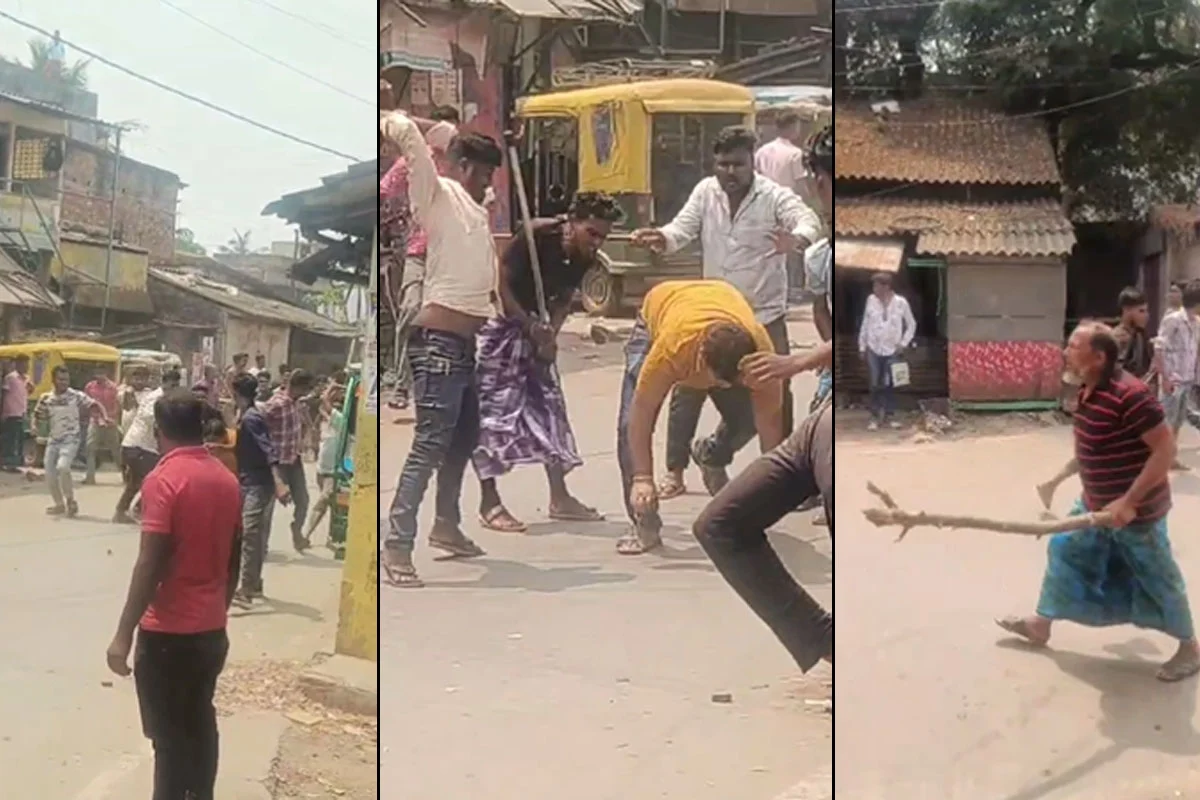
As the situation worsened, both political groups — supporters of the Trinamool Congress (TMC) and the Bharatiya Janata Party (BJP) — reportedly began hurling bricks at each other. Lathis and sticks were also allegedly used as the clash spread through the locality.
In the process of trying to control the crowd and separate the rival groups, police personnel themselves came under direct attack. According to the report, eight police officers were injured while attempting to restore order.
The chaos forced BJP candidate Bikash Sardar to leave the spot and seek shelter at a nearby Bharat Sevashram centre as the situation went out of control.
TMC Distances Itself, Cites ‘Public Anger’
The Trinamool Congress, however, has denied any organisational role in the incident. Local TMC leaders have claimed that there is “public anger against BJP” and that people’s resentment has been building up. They insist that the ruling party had no hand in the direct attack on police personnel.
Despite this denial, what stands out from the incident is that those who came under attack included not just party workers, but officers in uniform tasked with maintaining peace and enforcing election-related guidelines.
Why Government Servants in Uniform Are Becoming Targets
The Basanti clash highlights a growing and disturbing pattern in West Bengal politics: police and other government servants on duty are increasingly being dragged into party confrontations and physically targeted.
Several factors appear to be driving this trend:
-
Highly Polarised Political Climate
With the Bengal Assembly Election 2026 approaching, the political atmosphere is extremely polarised. In such a situation, even routine policing actions — such as asking a campaign to stop or change its route — are often interpreted as politically motivated. -
Street Confrontation as a Political Tool
Street clashes and show-of-strength politics have become common in several parts of the state. When tensions flare, government servants present on the ground — particularly police in uniform — frequently get caught in the middle and become direct targets. -
Erosion of Trust in Institutions
Both ruling and opposition parties regularly question the neutrality of institutions. When parties lose faith in the system, their workers often see officials not as neutral arbiters, but as extensions of rival political forces. -
Pressure From All Sides
Police are expected to maintain order, follow Election Commission guidelines, and respond quickly to complaints. At the same time, they face intense political pressure. This leaves frontline officers exposed and vulnerable when clashes erupt.
Electoral Context: Bengal 2026
The Basanti incident comes against the backdrop of an intense campaign for the West Bengal Assembly Election 2026. All major parties — including TMC, BJP, the Left, and Congress — are in full election mode, running aggressive booth-level and street-level campaigns.
With tempers high and trust low, every move by the administration or police is watched through a political lens. As the Basanti clash shows, this environment easily turns government servants in uniform into soft targets during confrontations.
Conclusion
The violence in Basanti is more than a local law-and-order problem. It reflects a deeper crisis where political rivalry is spilling over into direct attacks on those responsible for maintaining peace.
With eight police personnel injured in this single incident, the question becomes urgent: how long can government servants in uniform be expected to manage highly charged political confrontations if they themselves continue to be attacked?
As Bengal moves closer to polling day, ensuring the safety and neutrality of police and other government staff will be crucial—not only for their protection but also for preserving public faith in the democratic process itself.